MISS JULIE

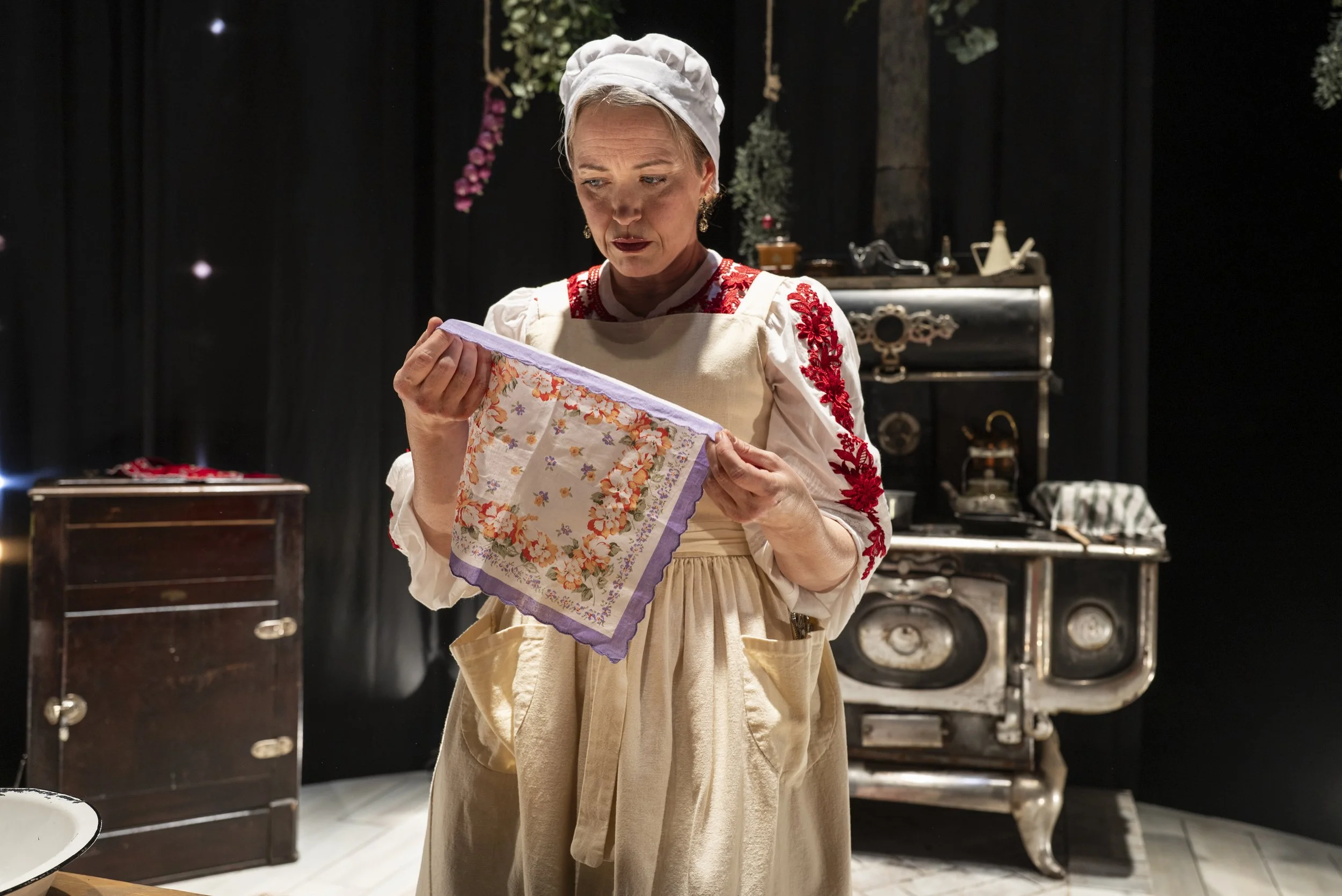
August Strindberg's Miss Julie is a seductive psychological drama set against the backdrop of a single Midsummer's Eve on a sprawling Swedish estate. Strindberg's play, written in 1888, explores social classes and the battle of the sexes, driven by the Naturalist concept that fate is not the core of humanity. His play, Miss Julie, is more of a powerful struggle, using sex as a weapon and a dose of manipulation. The play at Court Theatre, translated by Harry G. Carlson and directed by Gabrielle Randle-Bent, may leave audiences mostly confused by the translation. Strindberg, a Swedish playwright, novelist, and painter who has been cited as one of the fathers of modern drama, wrote Miss Julie from a scientific perspective. He hated what he considered stock characters: The Villain, The Hero, or the jealous lover. He wanted a more realistic world where people are shaped by the genetic patterns of their families and by events from their past and present. Julie is not only sad and crazy, but she is also a product of her parental upbringing, which shaped and molded her cognitive mindset. Miss Julie touches on Strindberg's struggles with the moral guilt of faith and the survival-of-the-fittest ethos of science. The narrative is perplexing, bizarre, and borders on being overly depressive. Randle-Bent kicks off the play as the cook kneads some dough to a jarring blend of frenetic punk-rock music and dazzling, erratic flashing lights that pulse and flicker for several minutes. This vivid spectacle creates an atmosphere that feels disjointed and detached from the unfolding narrative. This is where we meet three characters: Miss Julie, the manic-depressive, strong-willed daughter of the Count; Jean, the cunning valet with aspirations to rise in rank; and Kristine, the steadfast cook who embodies traditional values.


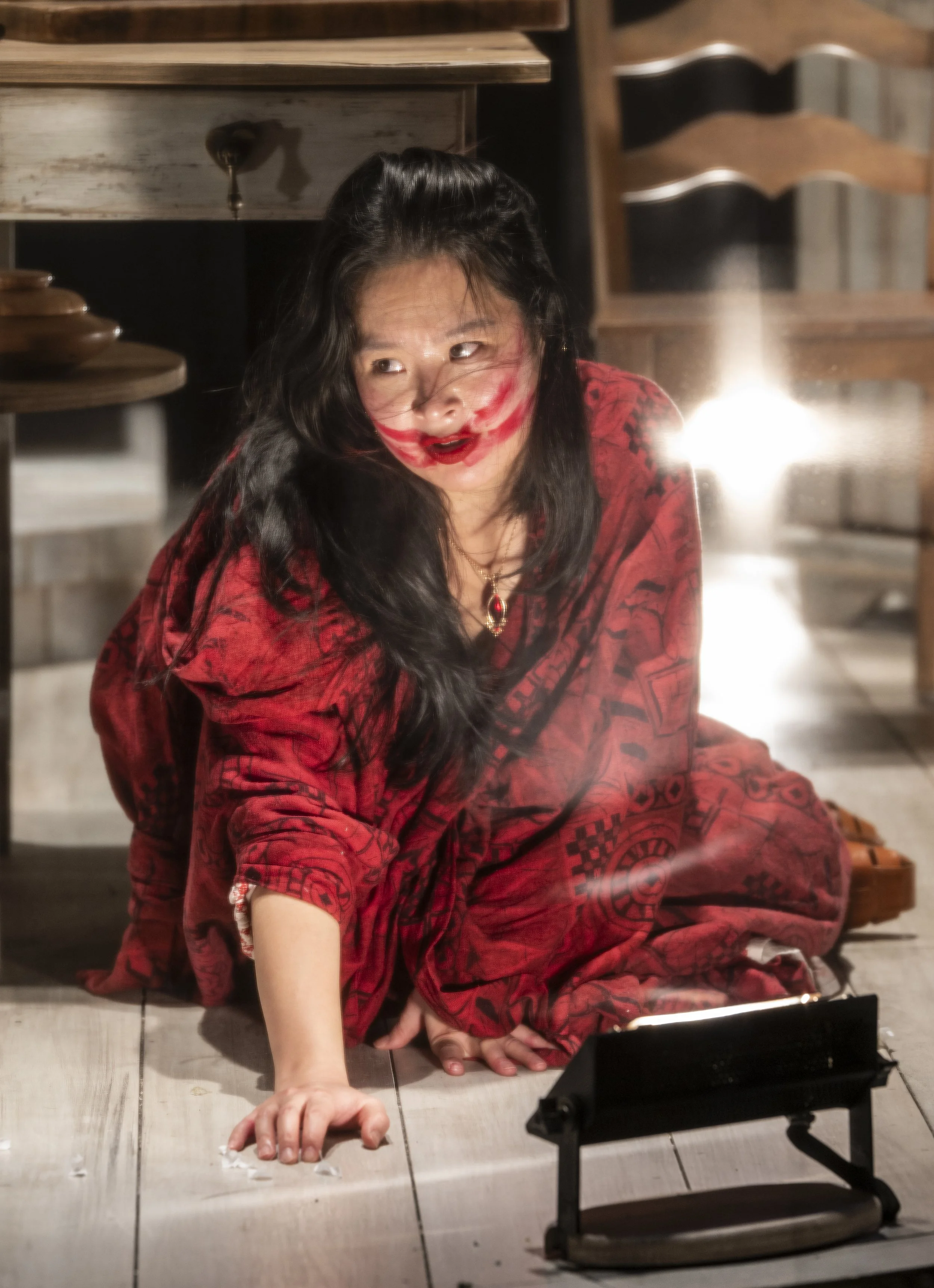
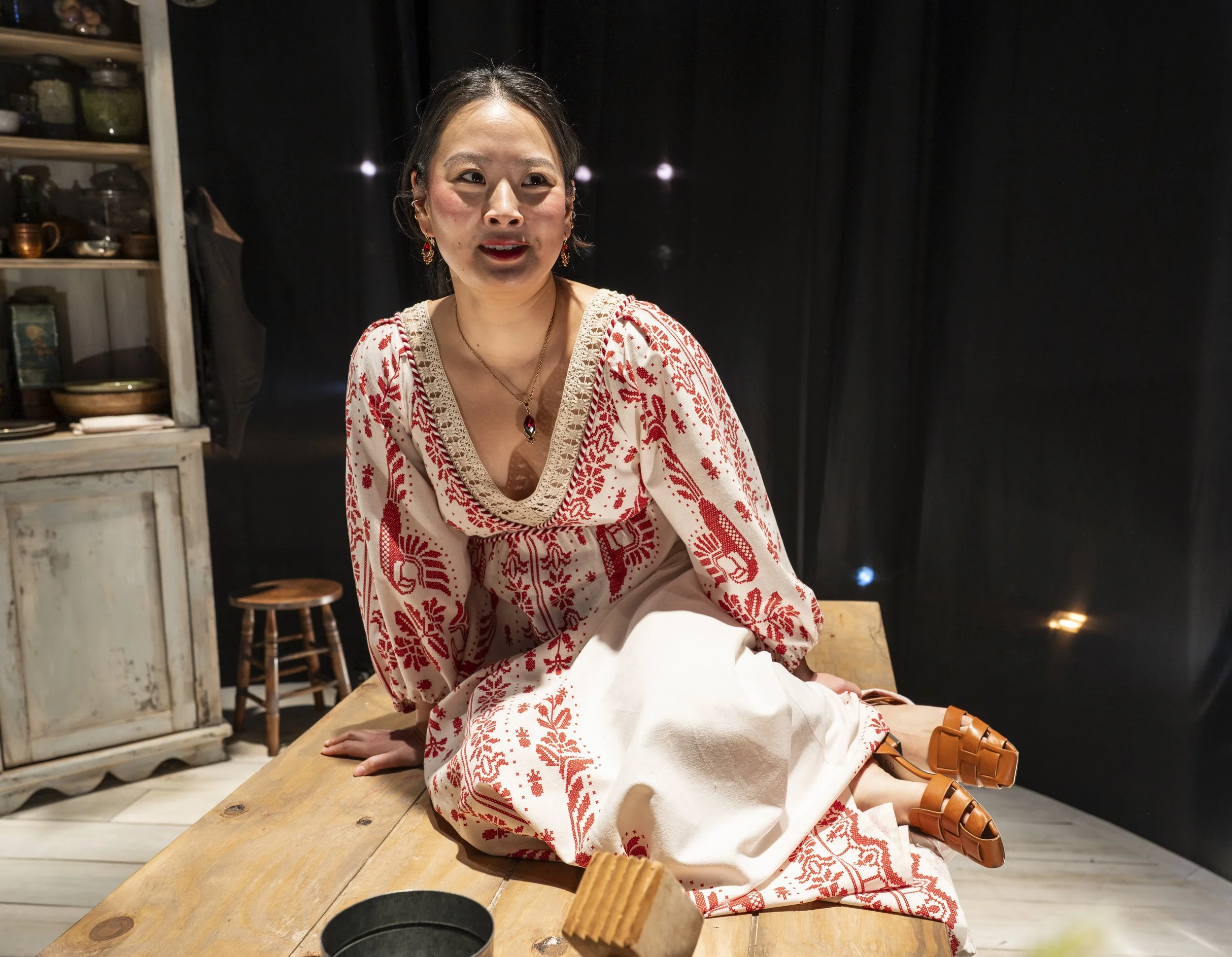




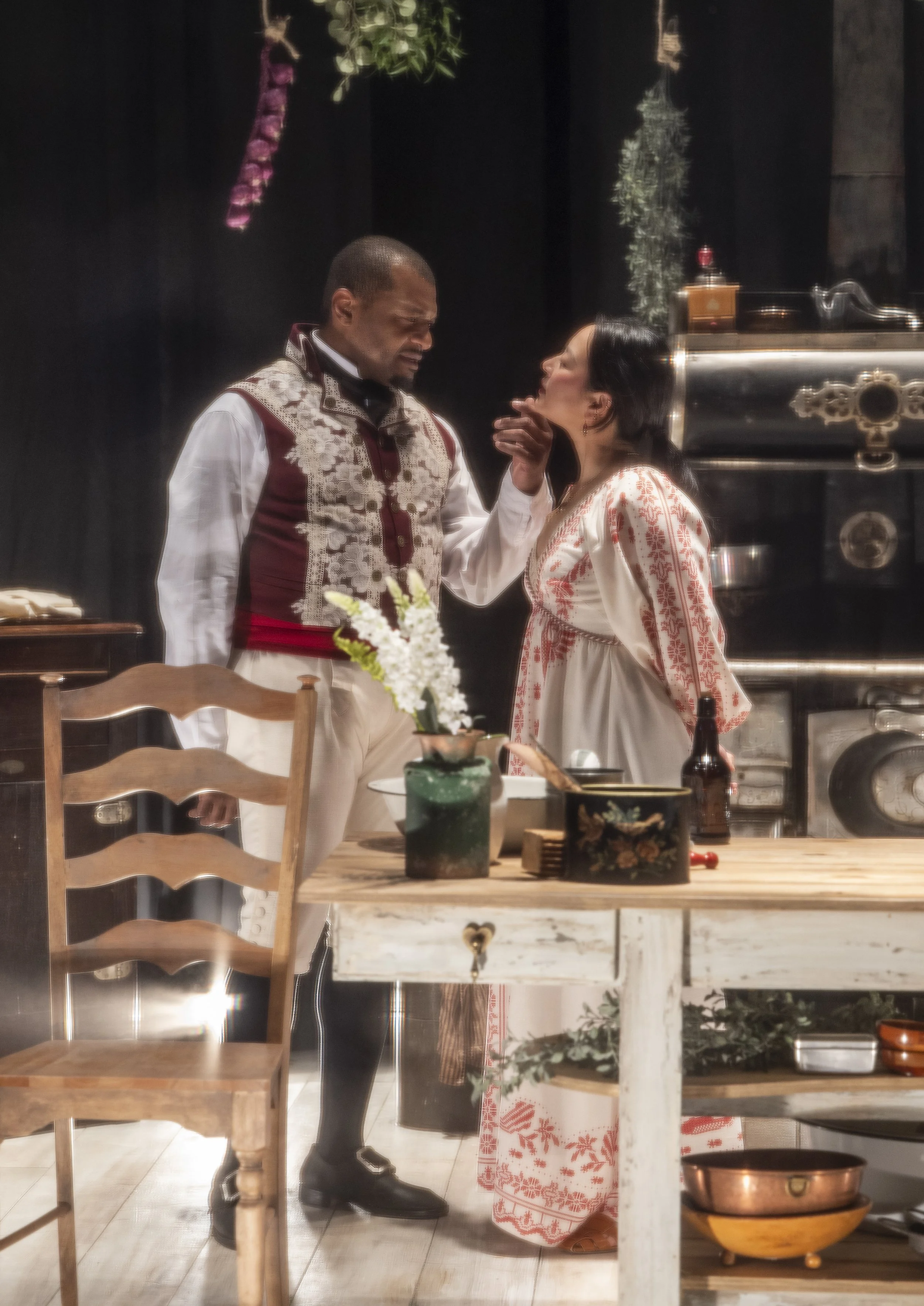

During a party, while the Count is away, Miss Julie openly dances and flirts with the servants. Jean, observing her behavior closely, admonishes Julie's actions as unbecoming and a blatant disregard for the decorum expected of someone of her high social standing. Undeterred, Julie parades into the kitchen, where her bold flirtation with Jean takes a provocative turn, completely disregarding his engagement to Kristine. Jean warns Julie about the dangers of her reckless behavior, but she dismisses his concerns with mocking laughter. In her defiance, she entices Jean into a perilous game of cat-and-mouse, shifting between the roles of master and slave. Using seduction as a means of control, Julie seeks to dominate the men in her life, fueled by her deep-seated animosity toward them. This hatred stems from her upbringing, shaped by a militant mother who instilled in her an unwavering resentment. Despite her disdain, Julie finds herself dangerously drawn to the power men possess. This conflicting attraction compels her to engage Jean in a wild and tumultuous encounter, blurring the lines between desire and manipulation. As she pulls him into her game, the struggle for control intensifies, revealing the twisted fate of her character and the toxic changes of power and submission.
After a wild sexual encounter, Jean loses his reverence for Julie, who has fallen from grace in his eyes, and becomes dominant and cynical. Her confidence unraveling, Julie becomes increasingly hysterical, which escalates into a battleground of power, desire, and despair, changing both characters' lives. They plot to run away to Switzerland to open a hotel, but they lack the money. When the Count returns, Julie is unable to cope with her fall from grace, and Jean, unable to overcome his ingrained "servant mentality," hands her a razor and suggests there is only one way out.
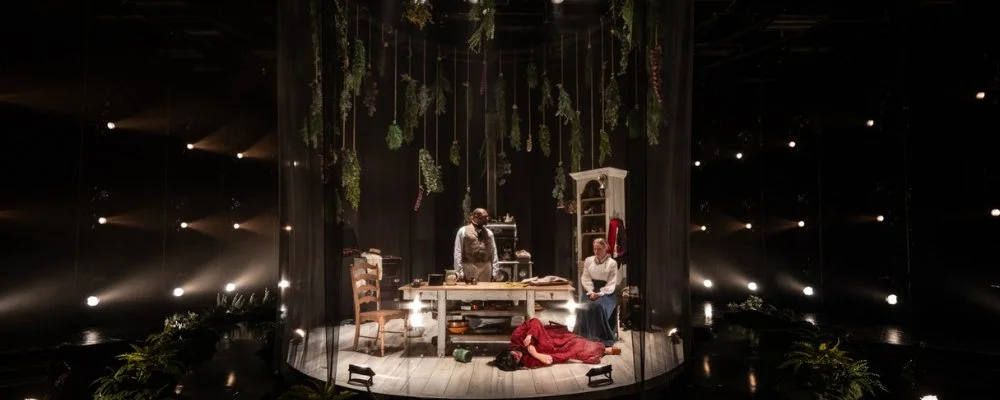
The talented actors Mi Kang as Julie, Kelvin Roston Jr. as Jean, and Rebecca Spence as Kristine give exceptional performances; however, despite their remarkable skills and dedication, the play itself falls short, struggling to resonate and unable to redeem its shortcomings. The circular staging, draped with a black silk sheer curtain intended to obscure the items scattered across the stage, seemed like a clever idea, but felt as if we were observing animals in a cage. The scenes between Kang and Roston Jr were interesting and provocative, but they could be more captivating if the screen were removed. Strindberg does not favor heroes or villains, but he clearly does not mind depicting women as both wild and submissive. Carlson's translated version should have included a Kristine who rejects Jean's engagement, standing firm in her faith after learning about his sexual encounter with Julie. Other productions have Julie taking her own life; however, this play ends with her mixing a concoction that she drinks, leaving the audience to come to their own conclusion whether Julie has committed suicide. History has it that Strindberg's "Miss Julie" hit its audience like an earthquake, shocking critics and leaving them disgusted and outraged, which is understandable for that time. It's a play that could benefit from some revisions and a more engaging translation.
⭐⭐1/2 STARS
Court Theatre
Miss Julie
By August Strindberg
Translated by Harry G. Carlson
Directed by Gabrielle Randle-Bent
Feb 6 - Mar 8, 2026

Thanks for visiting our website. For tickets, click on the above logo and for additional reviews, click below.