The Great Gatsby
You may be surprised to learn that F. Scott Fitzgerald's novel, The Great Gatsby, now considered a staple of the American literary canon, wasn't well-received at its inception. Fitzgerald even considered it a failure and a forgotten relic of the Jazz Age. It wasn't until World War II that it reached its heights, when the book was selected to boost the morale of American men overseas who could relate to the soldier returning home after the war and his desire to achieve the American Dream. The theater world has since embraced the novel, with thousands of performances throughout, and during the opening press performance, featuring a book by Kait Kerrigan (with music by Jason Howland and lyrics by Nathan Tysen), captured the essence of F. Scott Fitzgerald's flair. If you found yourself captivated by the cinematic rendition of The Great Gatsby, particularly the 2013 adaptation directed by Baz Luhrmann, starring Leonardo DiCaprio as the mysterious Jay Gatsby, which highlighted a more vivid and dynamic interpretation of Fitzgerald's classic novel, this new play doesn't quite live up to that jazzy, colorful party scenes, featuring the extravagant lifestyle of the Roaring Twenties, with it's fabulous parties, and frivolous spending, the battle of old East Egg vs new West Egg money which narrative subplot features others living in the Valley of Ashes, the working poor, lived in poverty. The film version takes creative liberties, employing dramatic montages that elevate the visuals and immerse the audience in the era's glitz and glamour. In contrast, the stage adaptation, limited by its physical setting, relies heavily on dialogue to convey the story's emotional depth, while mixing a selection of songs to enhance the storytelling. The play also takes a deeper dive into the criminal element in The Great Gatsby, most notably through the character of Meyer Wolfsheim, who appears multiple times. Wolfsheim embodies the shady dealings of the 1920s, serving as a connection to the illicit world of organized crime and corruption that lurks beneath the glitzy surface of Gatsby's lavish lifestyle. His presence and the revelation of his connection with Gatsby are powerful reminders of how obsession can corrupt one's moral character.
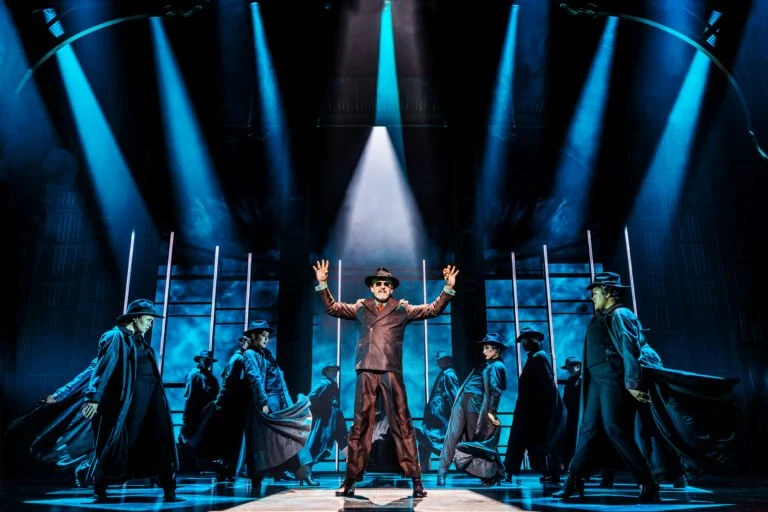
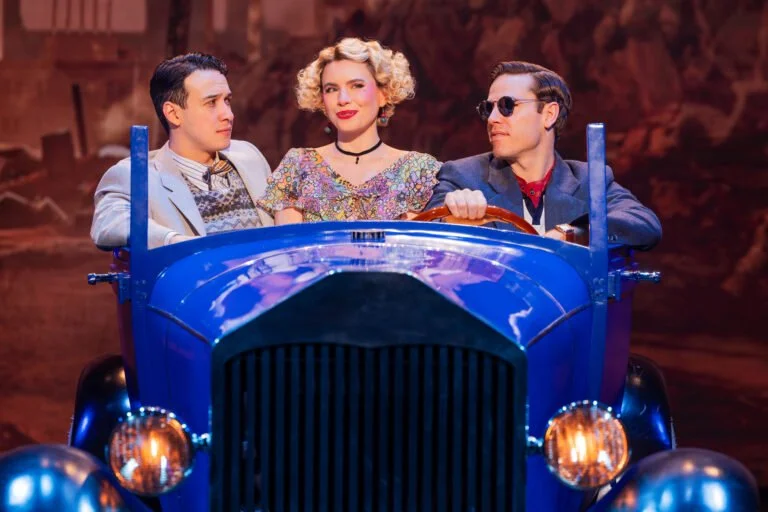
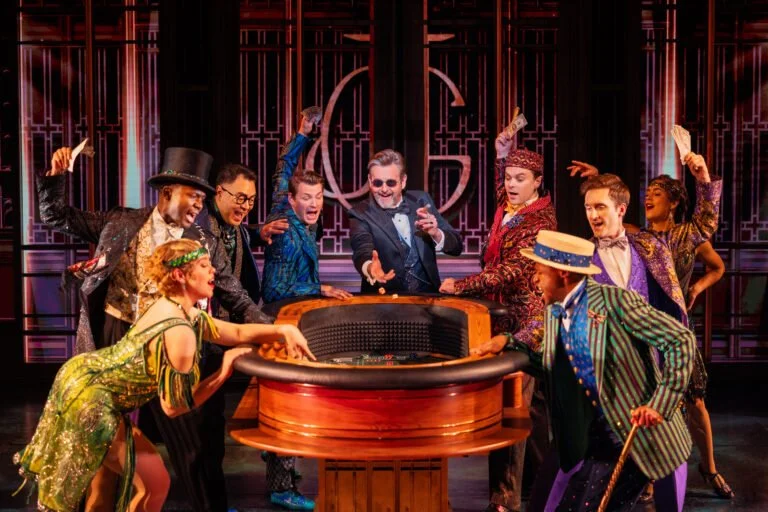
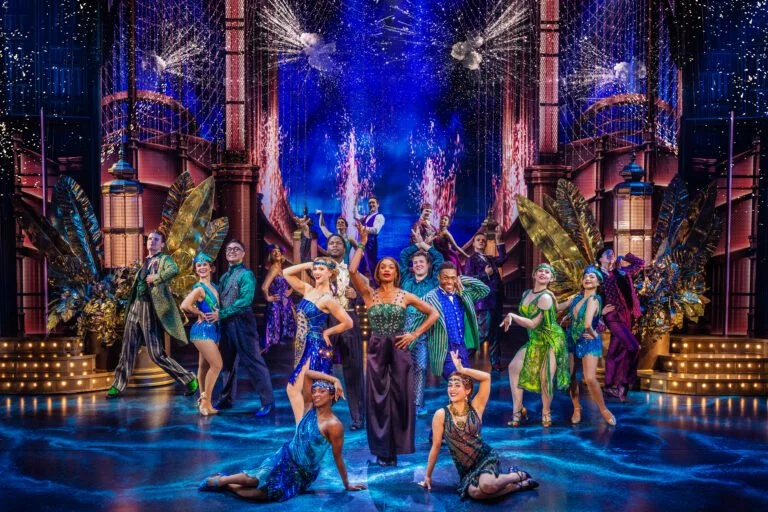
To summarize The Great Gatsby, the story takes place in the summer of 1922. Nick Carraway, a young man from the Midwest, moves to West Egg, Long Island. He rents a cottage next door to a reserved neighbor, Jay Gatsby, a self-made millionaire known for throwing lavish parties at his home, where no one actually sees him. Nick gets a personal invitation to meet Gatsby and soon finds himself drawn into his world. He discovers that Gatsby's entire life—his mansion, wealth, and fame—is a carefully constructed performance intended to capture the attention of Nick's cousin, Daisy Buchanan. Five years earlier, Gatsby had a passionate romance with Daisy before he went off to war, and Daisy eventually married Tom Buchanan, an affluent man from East Egg.

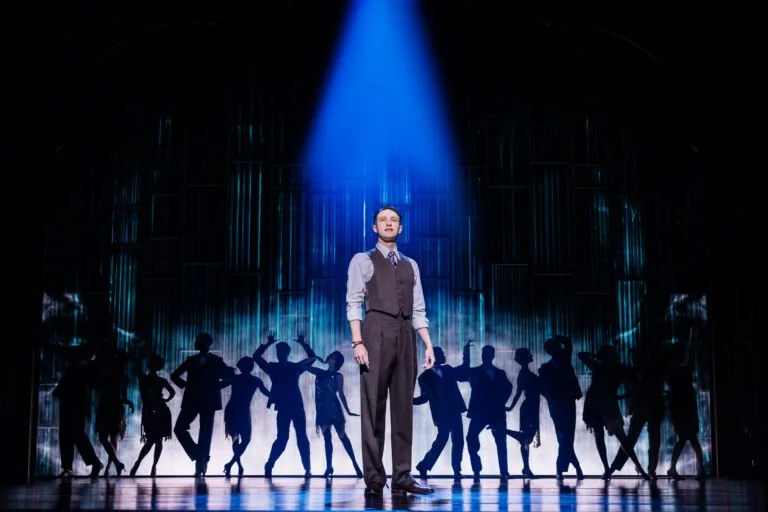
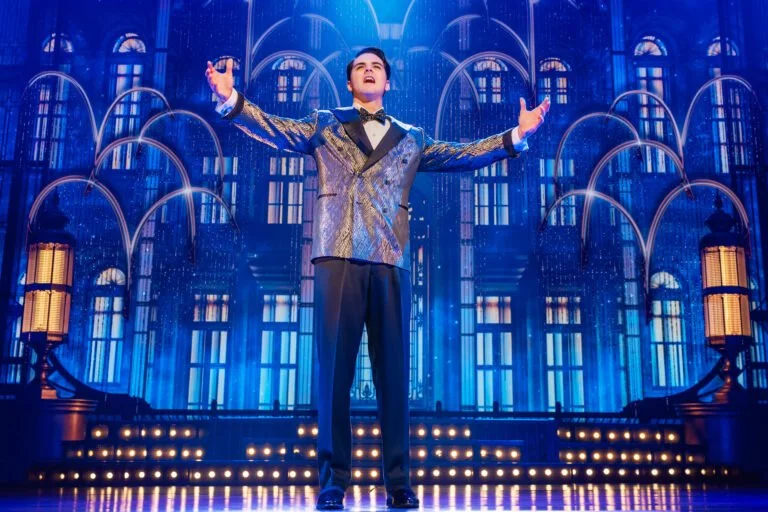
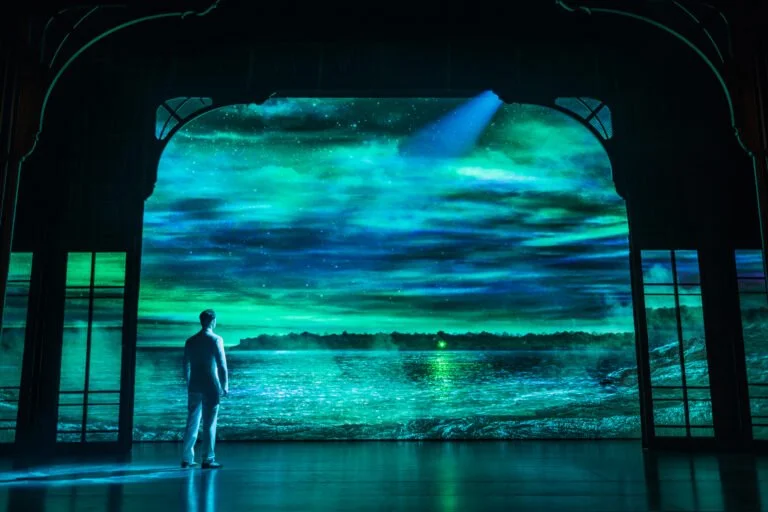
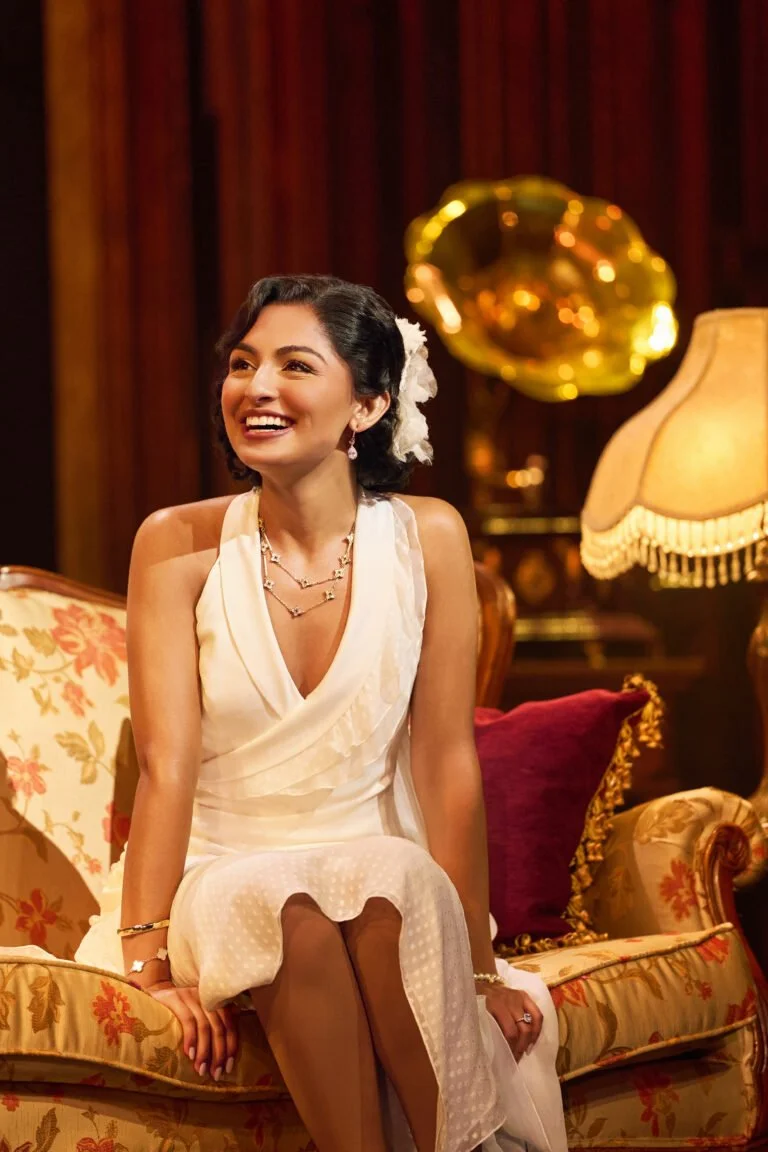
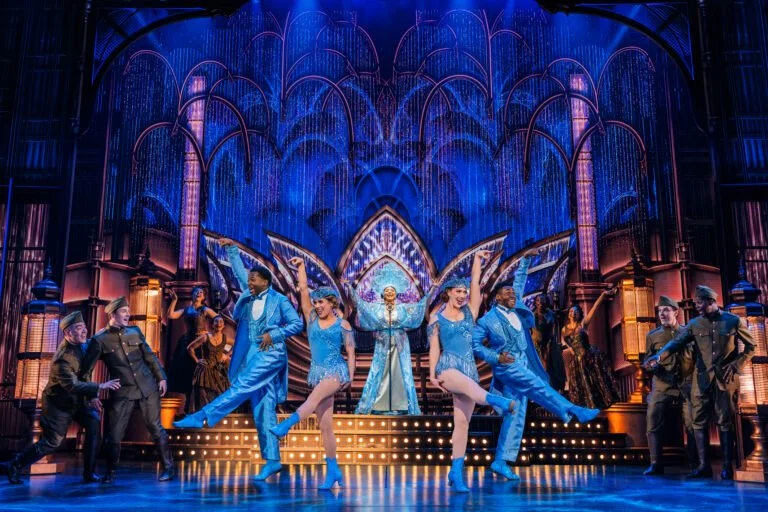
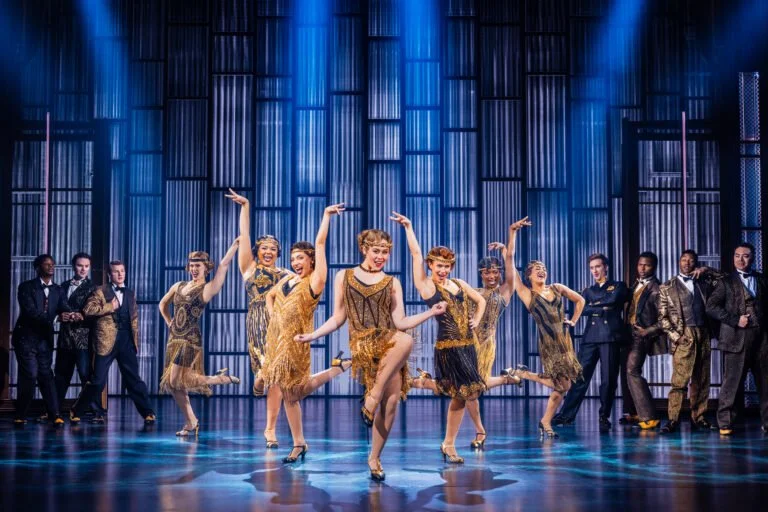
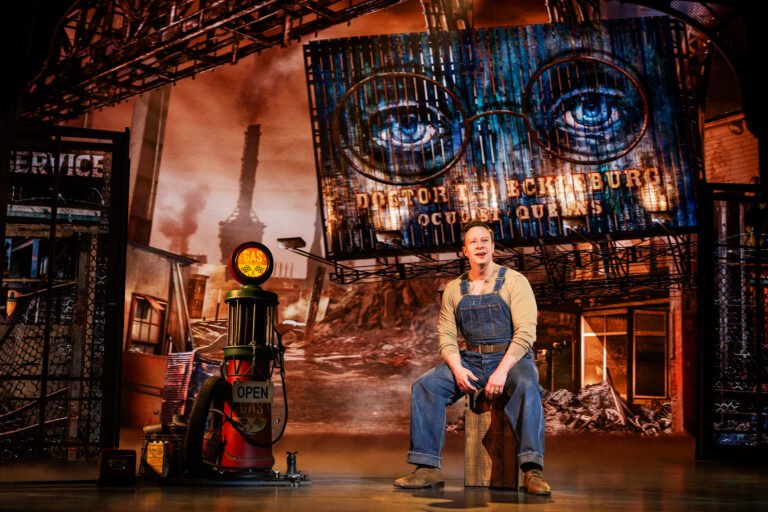
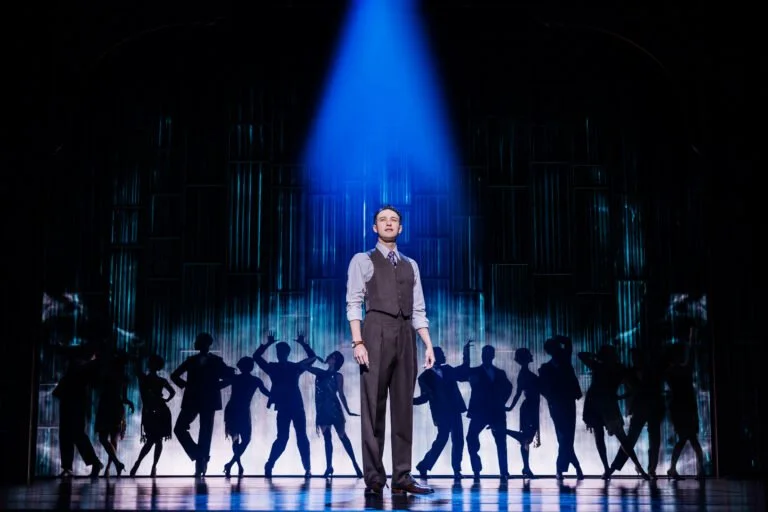
The staging in this play is absolutely breathtaking, creating a captivating visual atmosphere for the audience. While a few costumes didn't quite fit the historical period, they still added a stylish, elegant touch to the production. One of the standout features of the set was the presence of gorgeous vintage cars. The elaborate projections were equally impressive, creating a vivid backdrop for the wealthy Gatsby mansion, and the striking picture of the Doctor T.J. Eckleburg billboard—the iconic "Eyes of God"—which loomed ominously over the Valley of Ashes, highlighting the contrast between wealth and despair. The choreography was another remarkable aspect of the production, featuring the dynamic Tyler Johnson-Campion and Josiah Hicks, who reminded me of the Nicholas Brothers. They were truly phenomenal. Jake David Smith delivered an outstanding performance as Jay Gatsby. The supporting cast also shone brightly, with Senzel Ahmady's portrayal of Daisy capturing her charm and complexity, Leanne Robinson's portrayal of Jordan Baker, who also has a lovely voice, showcasing her sophistication and grace, and Will Branner's interpretation of Tom Buchanan, displaying his compelling mix of arrogance and vulnerability. Joshua Grosso, in the role of Nick Carraway, truly excelled as the midwestern outsider, navigating the turbulent waters of wealth and ambition.
Kerrigan's musical spends more time developing the backstory of Gatsby and Daisy, and expanding the roles and relationship of Jordan Baker and Nick Carraway, making their connection feel more romantic, featuring the process of falling in love, while tragically displaying how love can be lost through the perspective of the old money vs new money significances. The devastating car crash that kills Myrtle Wilson, Tom's mistress, in the final scene was handled through lighting, sound effects, and slow-motion. In contrast to Gatsby's tragic demise, though lacking spectacle, it leaves a lasting, memorable impression. Gatsby continues to inspire its audience with breathtaking cinematic staging, heartfelt dialogue, and exhilarating, high-energy dancing. It's sure to be a night filled with unforgettable moments of magical entertainment.
⭐⭐⭐1/2
Cadillac Palace Theatre
The Great Gatsby
Based on the novel by F. Scott Fitzgerald
Book by Kait Kerrigan
Music by Jason Howland
Lyrics by Nathan Tysen
April 21 - May 3, 2026

Thanks for visiting our website. The tickets, please click on the above logo and for additional reviews, click below.