Called the American tribal love rock musical Hair, written by James Rado and Gerome Ragni in 1967, the play's subtitle carries a revolutionary meaning, reflecting how youth felt about events in America and emphasizing its cultural significance. It's a radical play that perfectly captures the chaotic era of the 60's, when civil disobedience challenged the social order in America. Known as The Tribe, or affectionately called hippies, this unprecedented generation descended from the 50's Beatniks sought to express their individuality and break free from mainstream societal norms. It emphasized how the youth of that era viewed the Vietnam War, the enforcement of the military draft, and the generational divide, issues they passionately believed in and vocally fought to uphold. Embracing a vibrant rock-culture theme, "Hair" unfolds as a chaotic, dynamic montage of scenes and songs that immerse the audience in the era's tumultuous spirit. This love feast features iconic, unforgettable songs such as "Aquarius," the dawn of a new era of hope and love, "Let the Sunshine In," hope and tragedy in which Claude, one of the main characters, is drafted and killed, "Colored Spade" dipicting the ugly racial slurs of the era, and "Hair," where in the 60's, allowing your hair to grow long was a defiant statement against the clean-cut, military buzz cuts of the Armed Forces and the corporate world; symbolizing their desire to welcome communal living, uniting under a shared belief in love, acceptance, and peace, prioritizing these ideals over the burdens of responsibility and the horrors of war. The story revolves around "The Tribe," a community that shares intimate lodging and stories of their lives with a central person named Claude, who faces a pivotal decision: whether to join his friends, led by the charismatic Berger, in dodging the Vietnam War draft or to succumb to societal pressures and fight in a war he deeply opposes. Both Claude and Berger are inspired by the show's creators, James Rado and Gerome Ragni, who infused their own experiences into these characters and starred as Claude and Berger in the original Off-Broadway and Broadway productions.
I was a young lad, six years old, when the production premiered and eight during the iconic Woodstock; still, I remember images of people partying in the mud, scenes from the television networks portraying a negative view of protestors, depicting them as drug users, and sexual deviants living in unsanitary conditions. It's also a personal narrative that my family lived; as I can still see my brother walking away from the ghettos of the project we once lived in, with white officers escorting him off to Vietnam.
The initial 1967 reviews of Rado and Ragni's play ranged from shock to total enjoyment, which seemed to be how most of the audience felt the night we were there. You can see the recognition among those who lived through that era, contrasted with the somewhat confused look on the younger audience as they try to understand the narrative. The Taboo subject of the times reflects the ever-changing environment in the United States regarding the acceptance and disobedience of social norms.
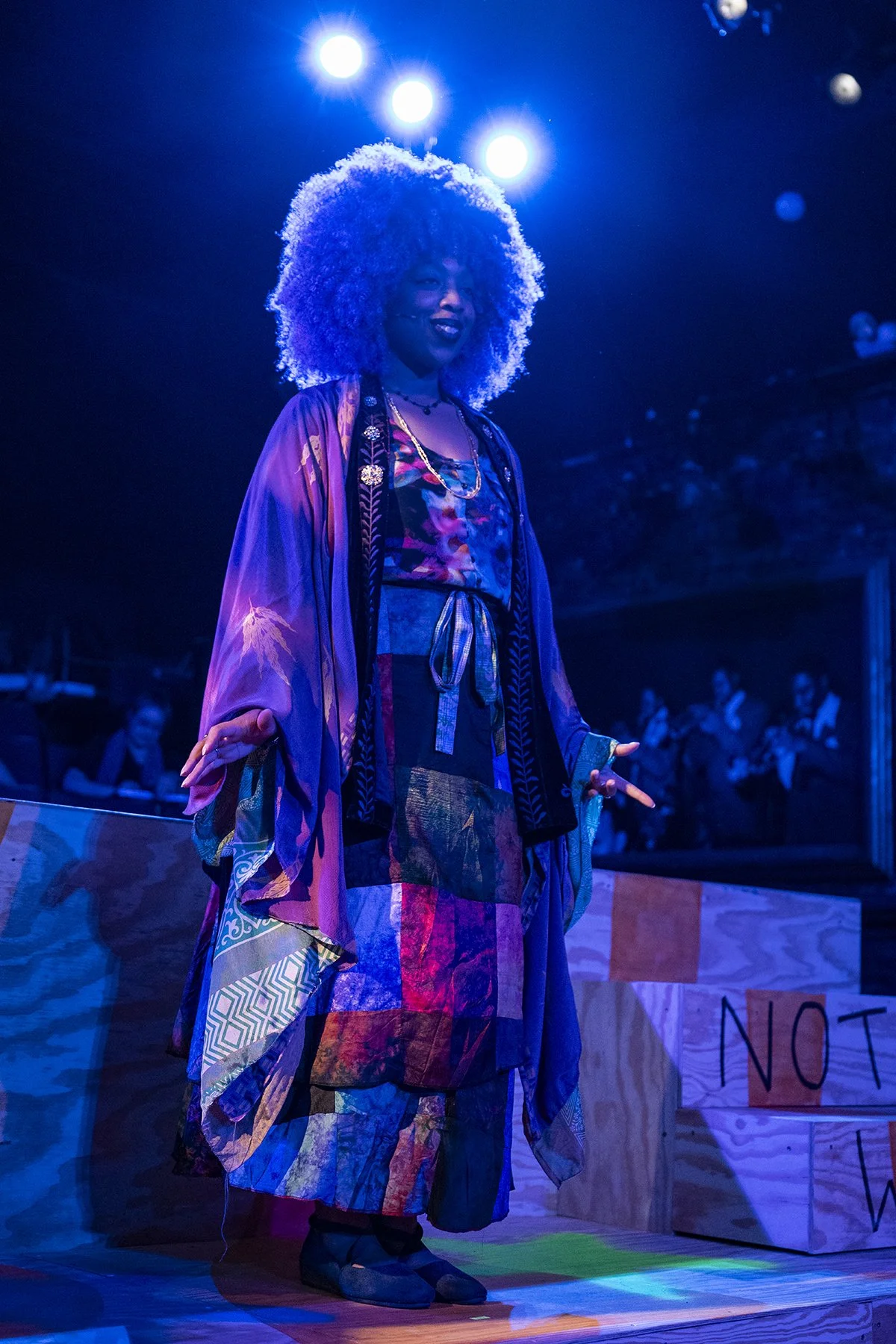
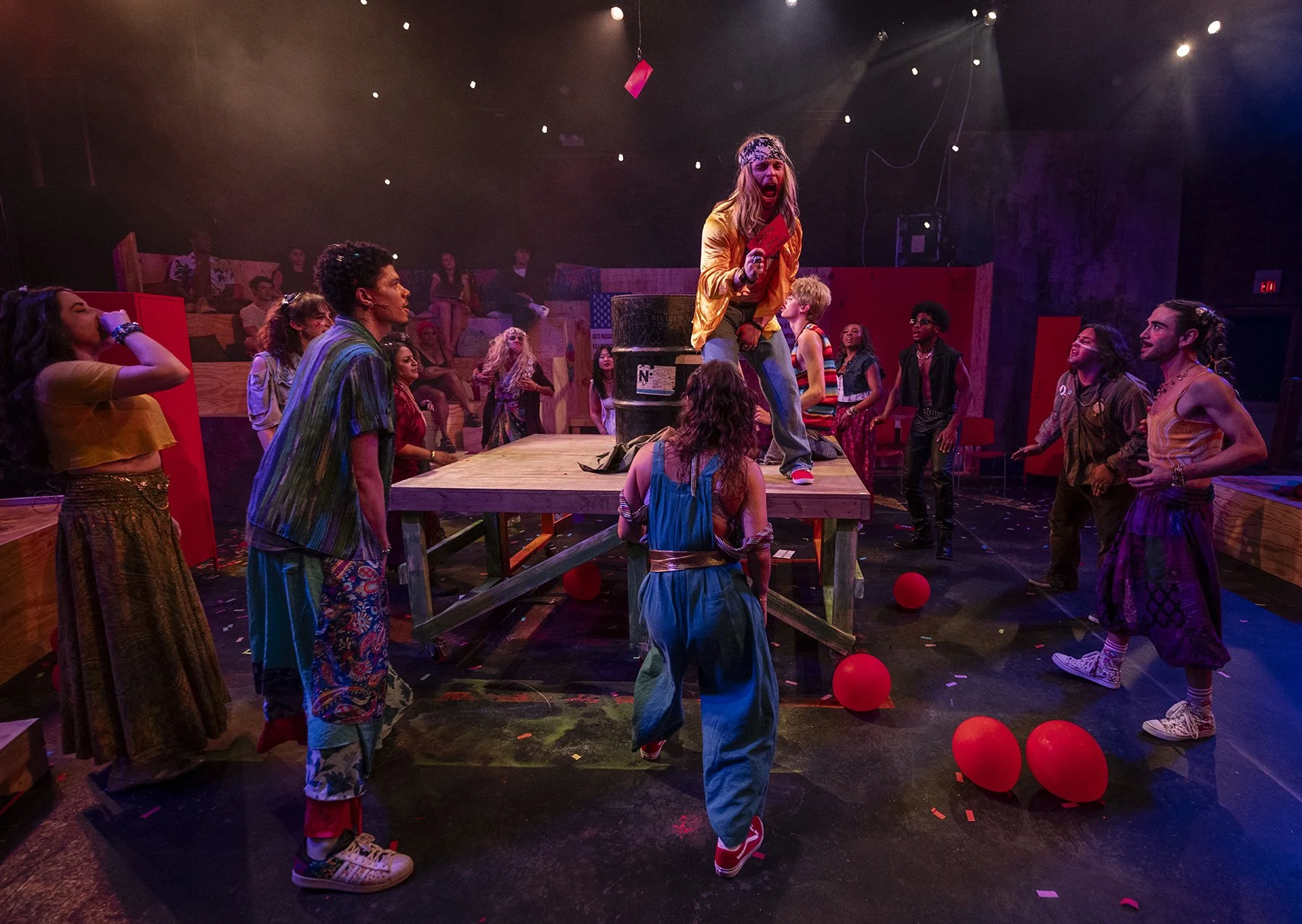
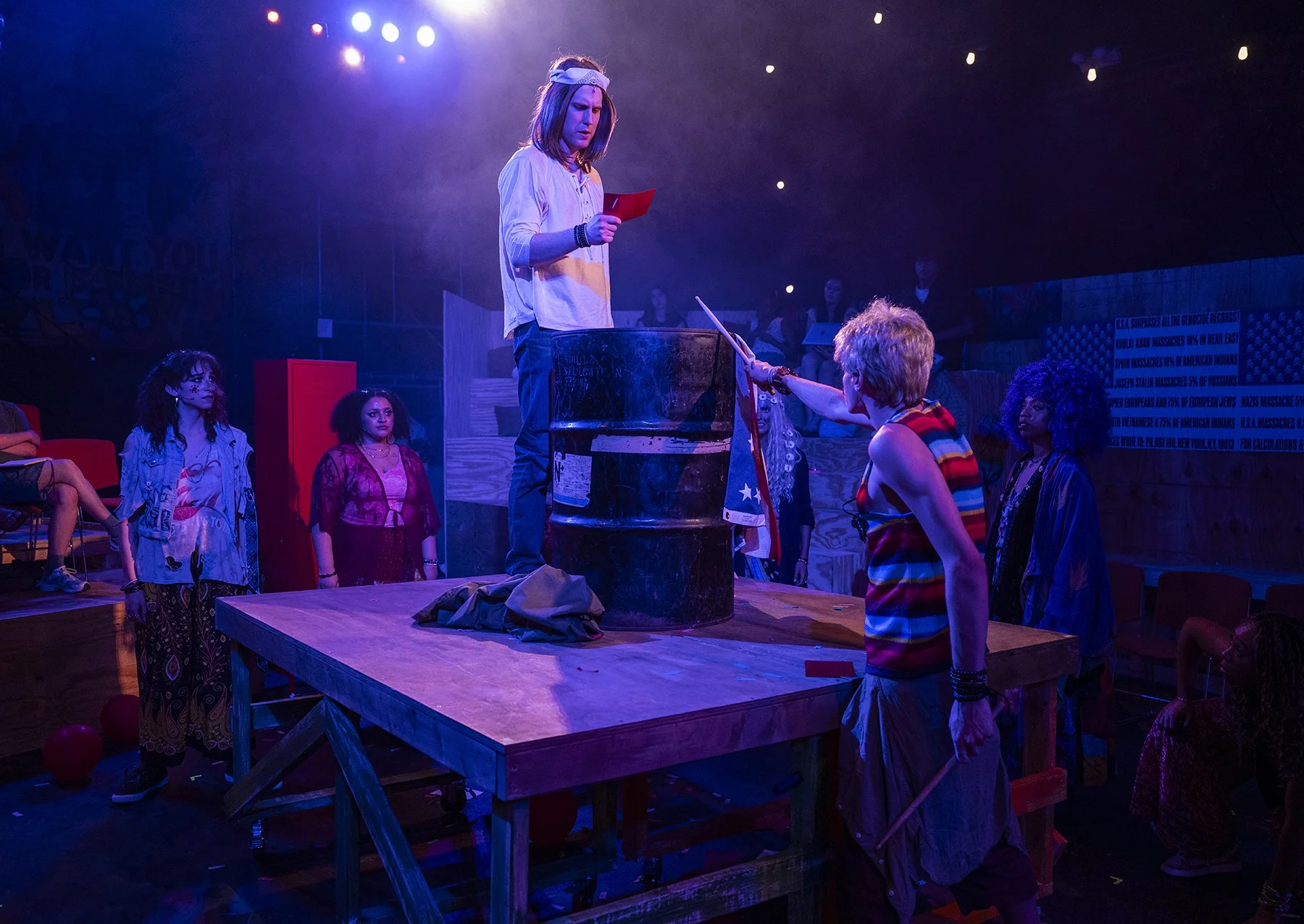
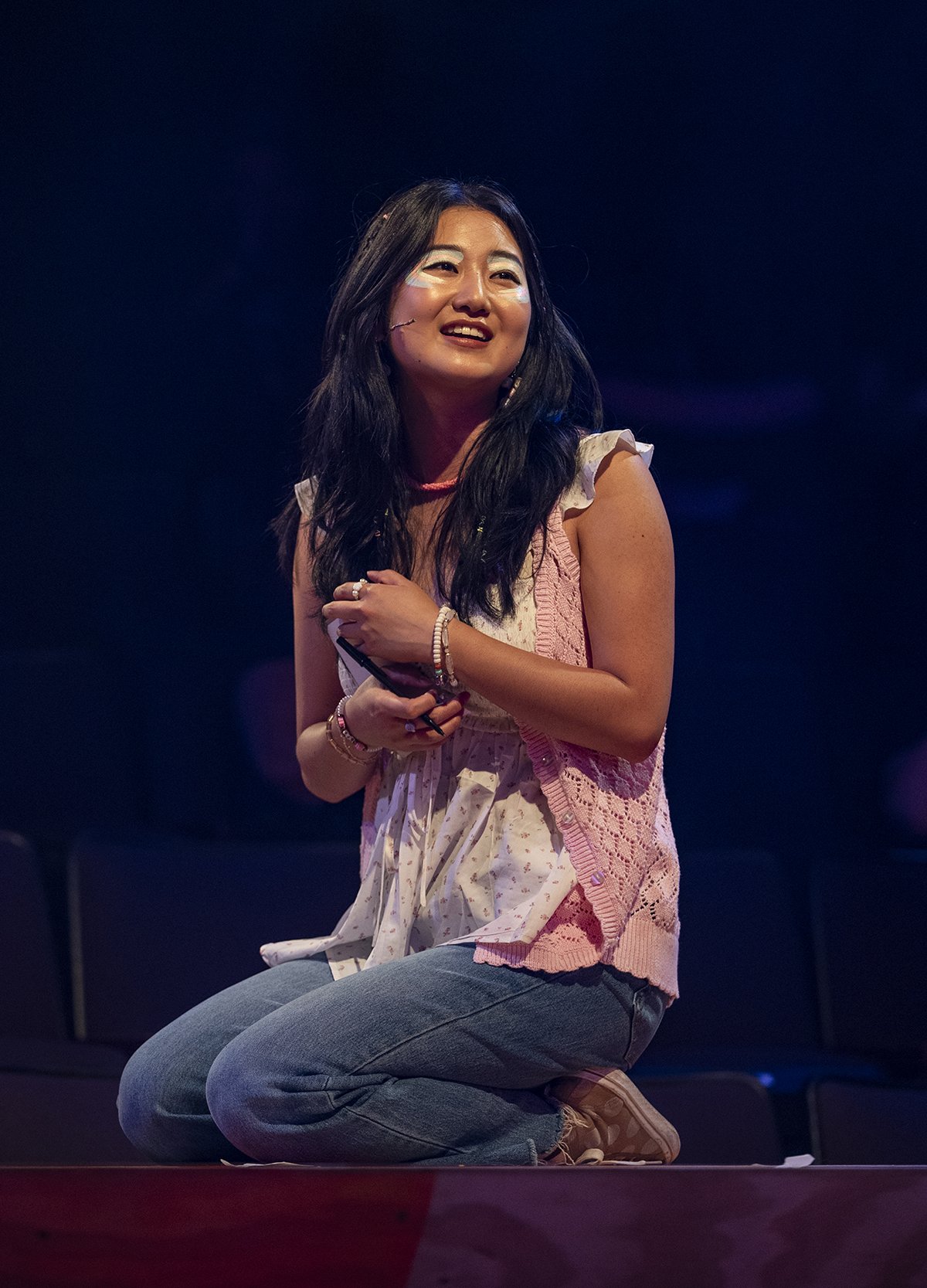
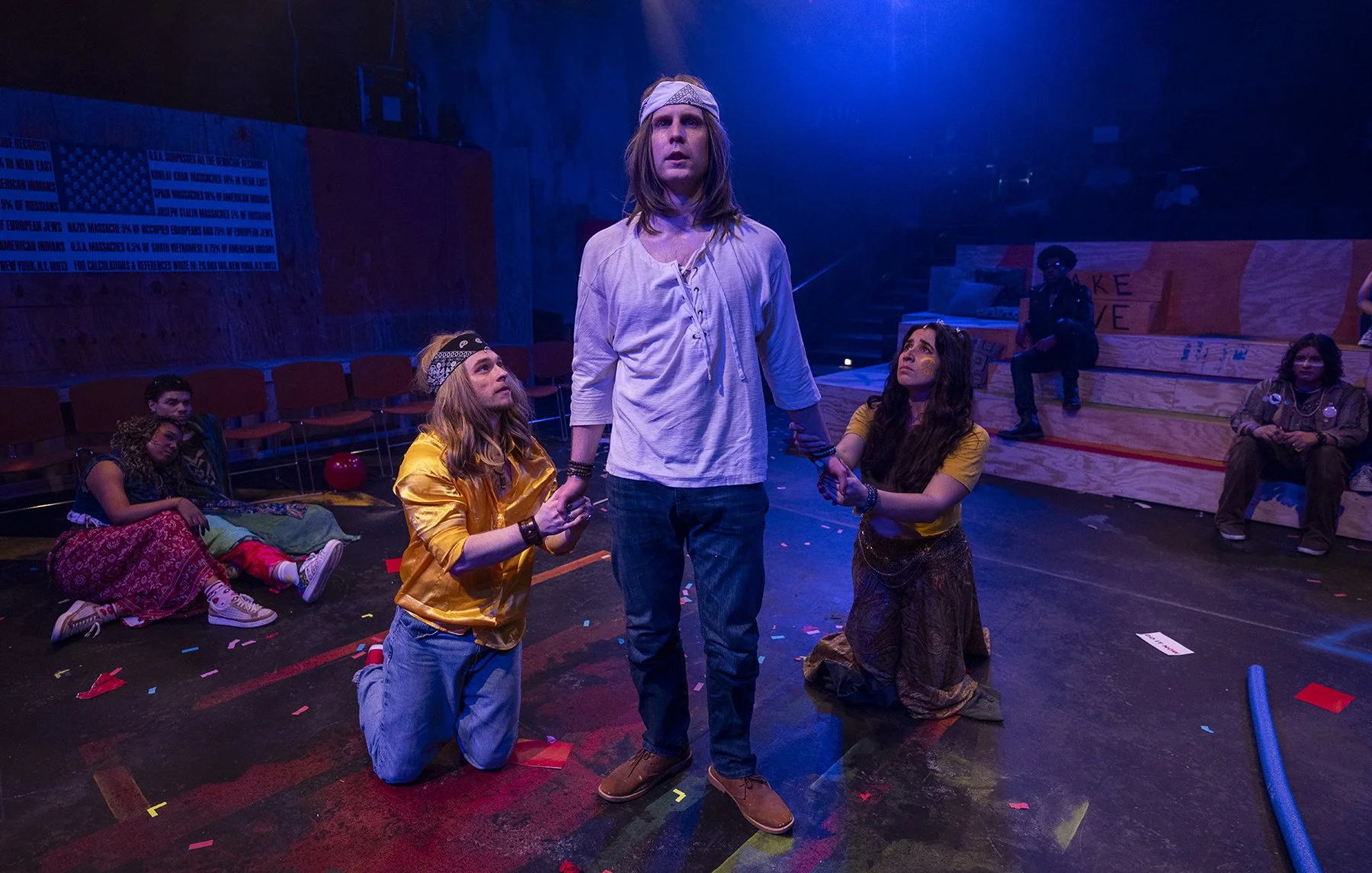
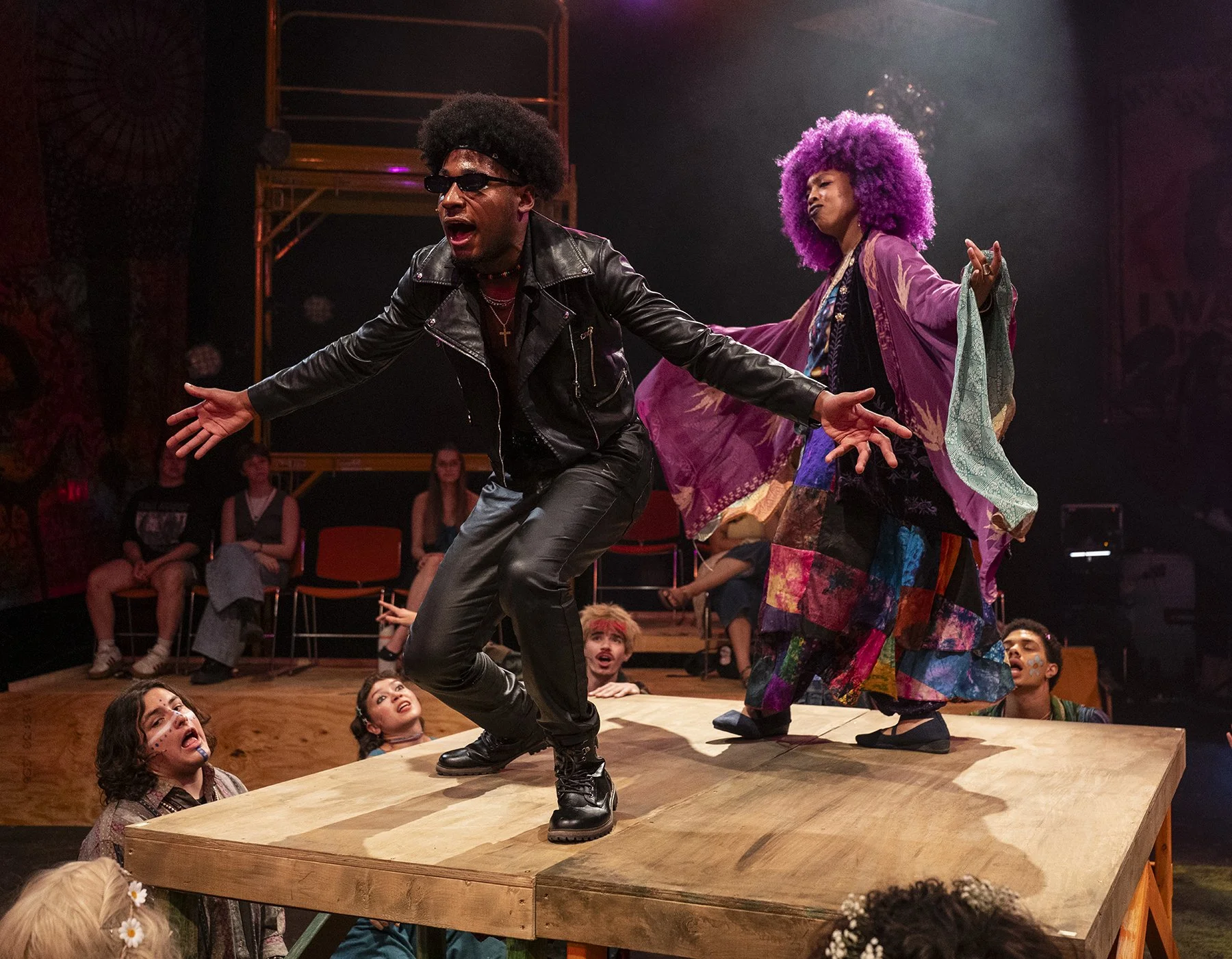
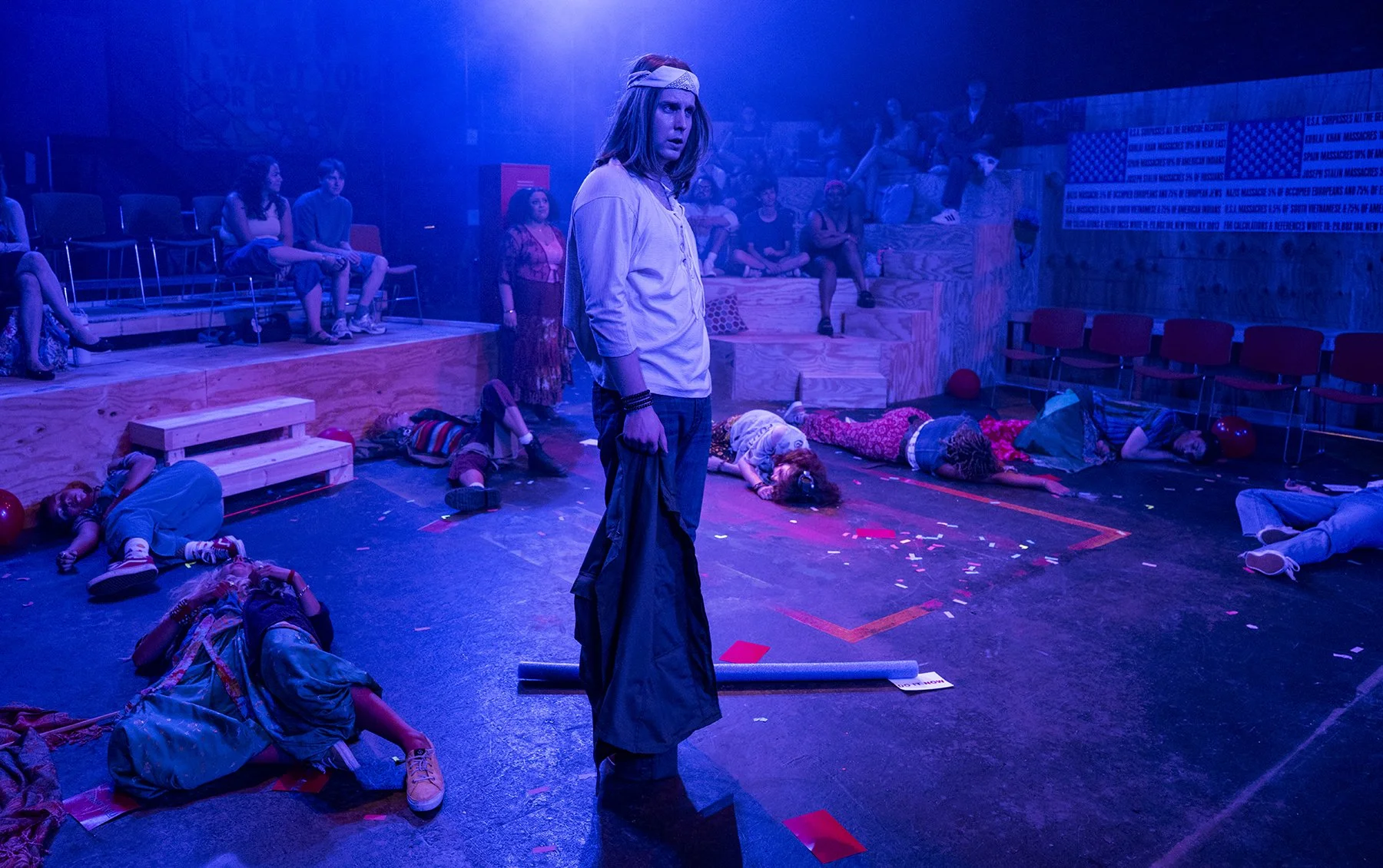
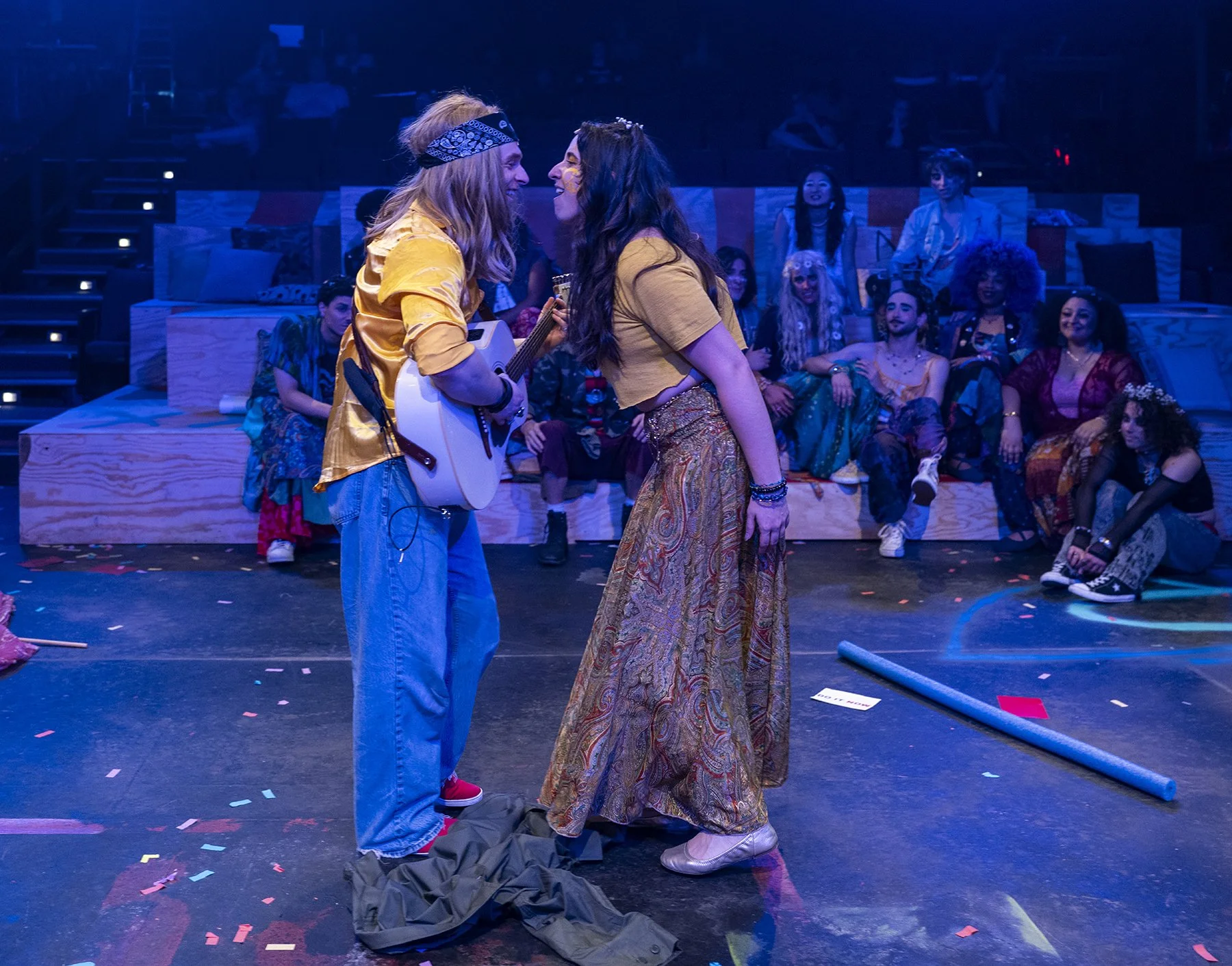
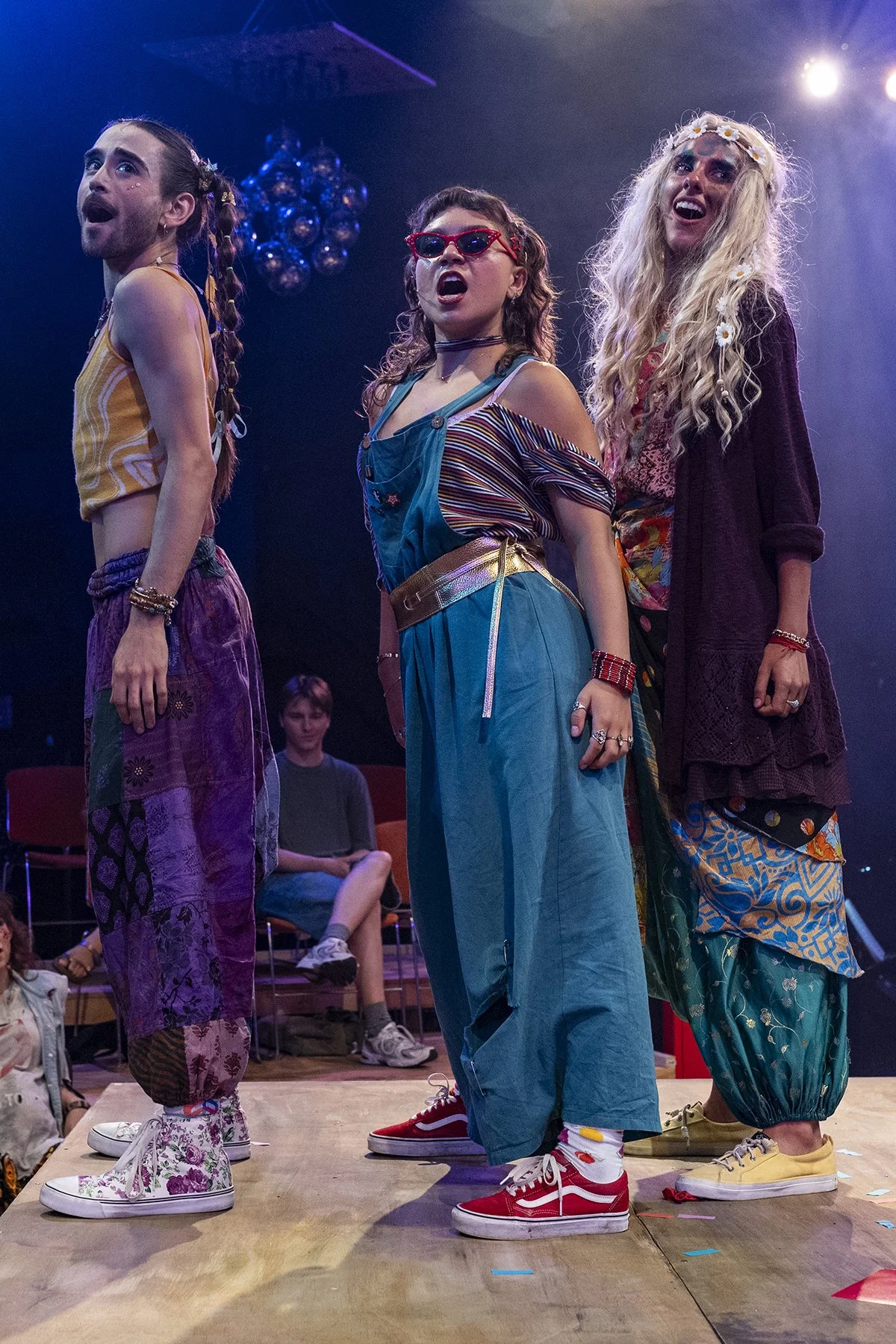
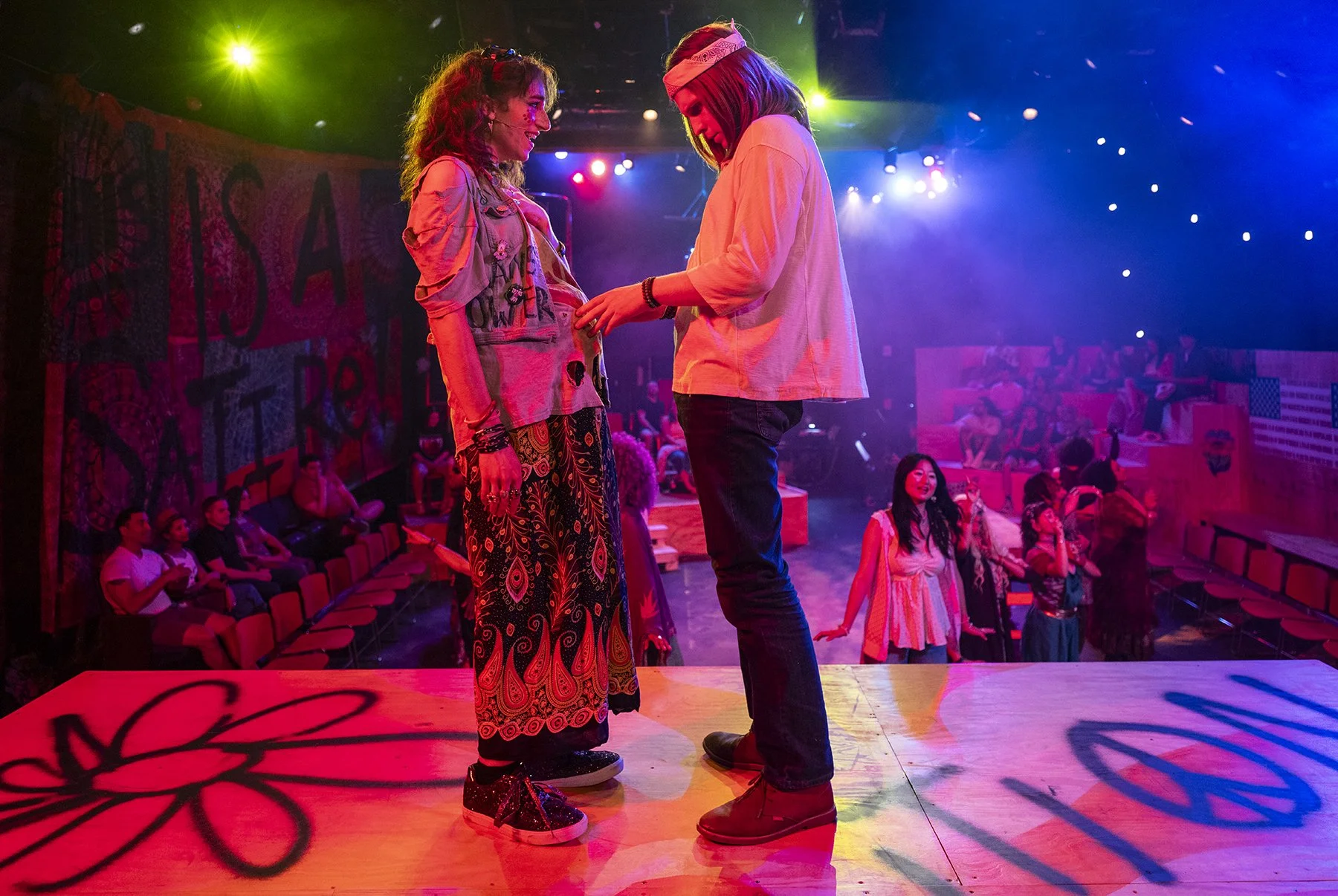
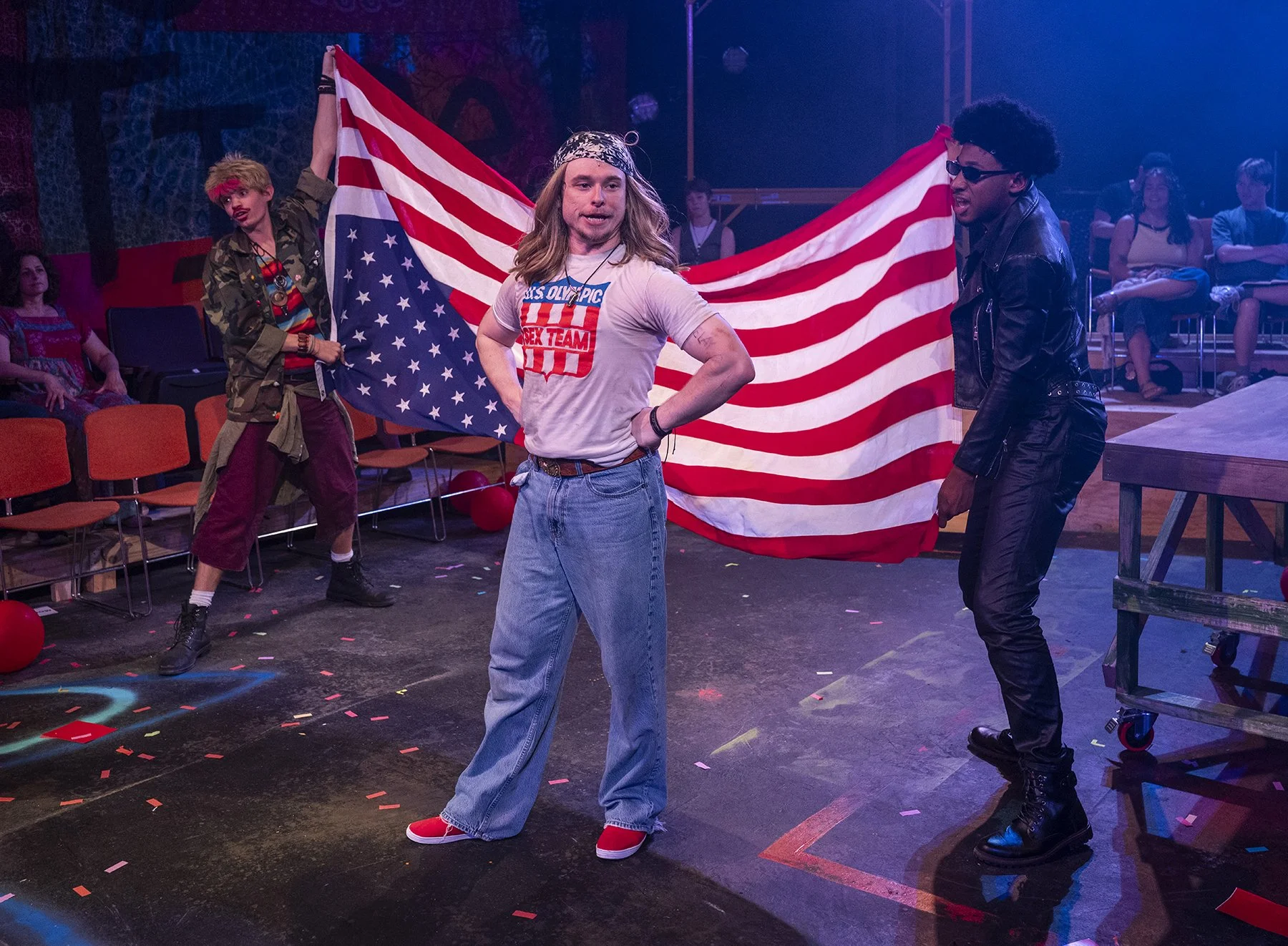
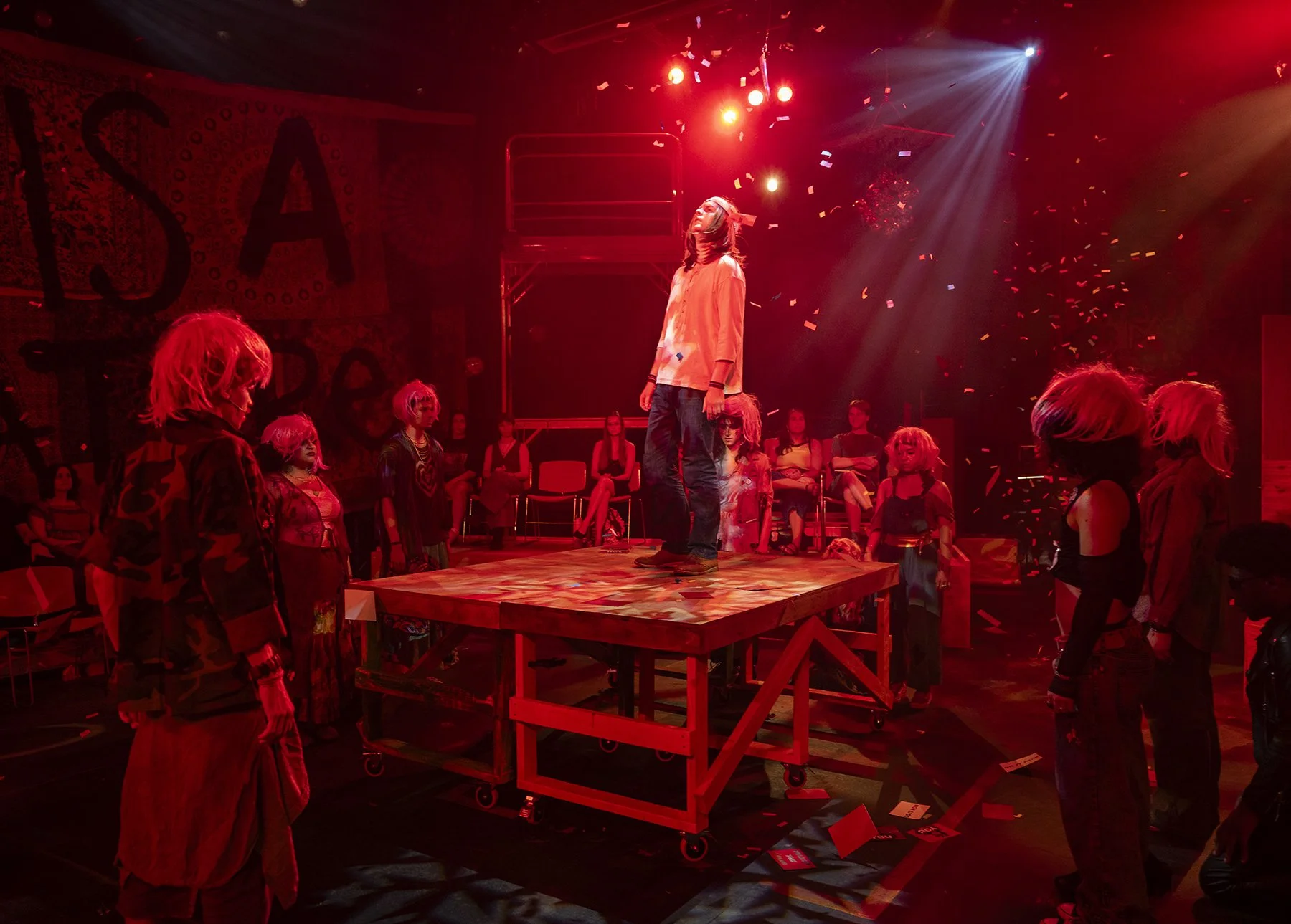

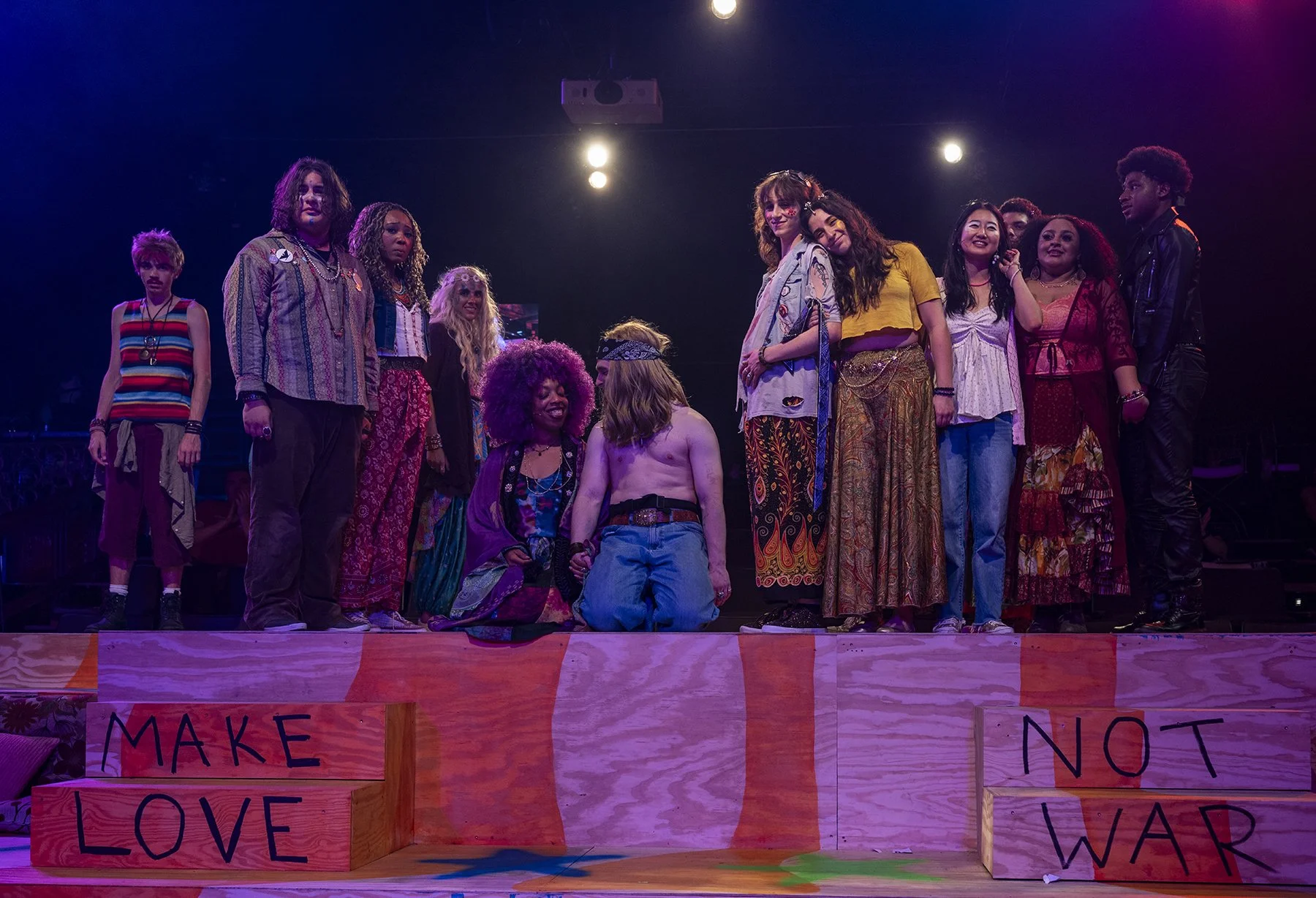
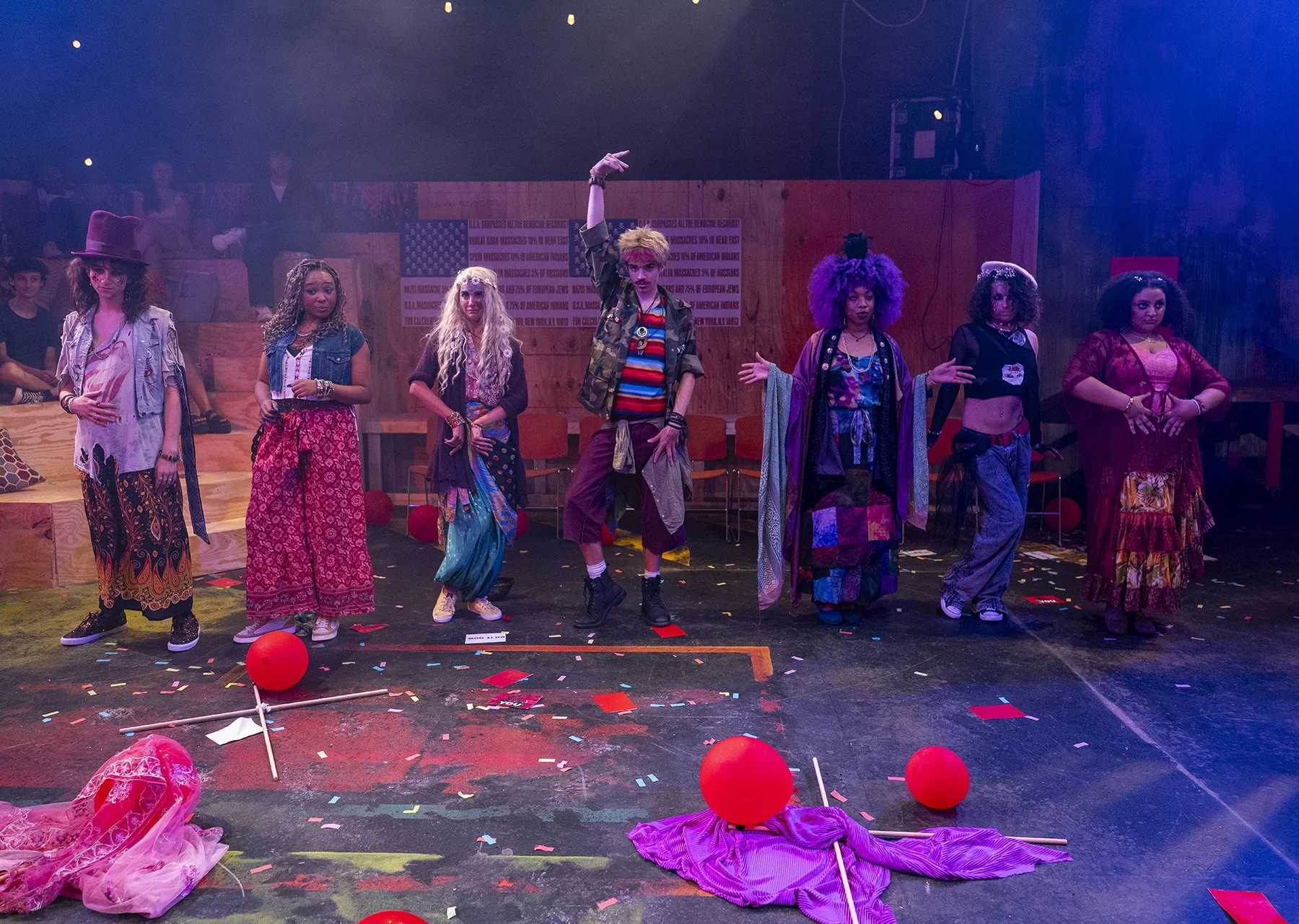
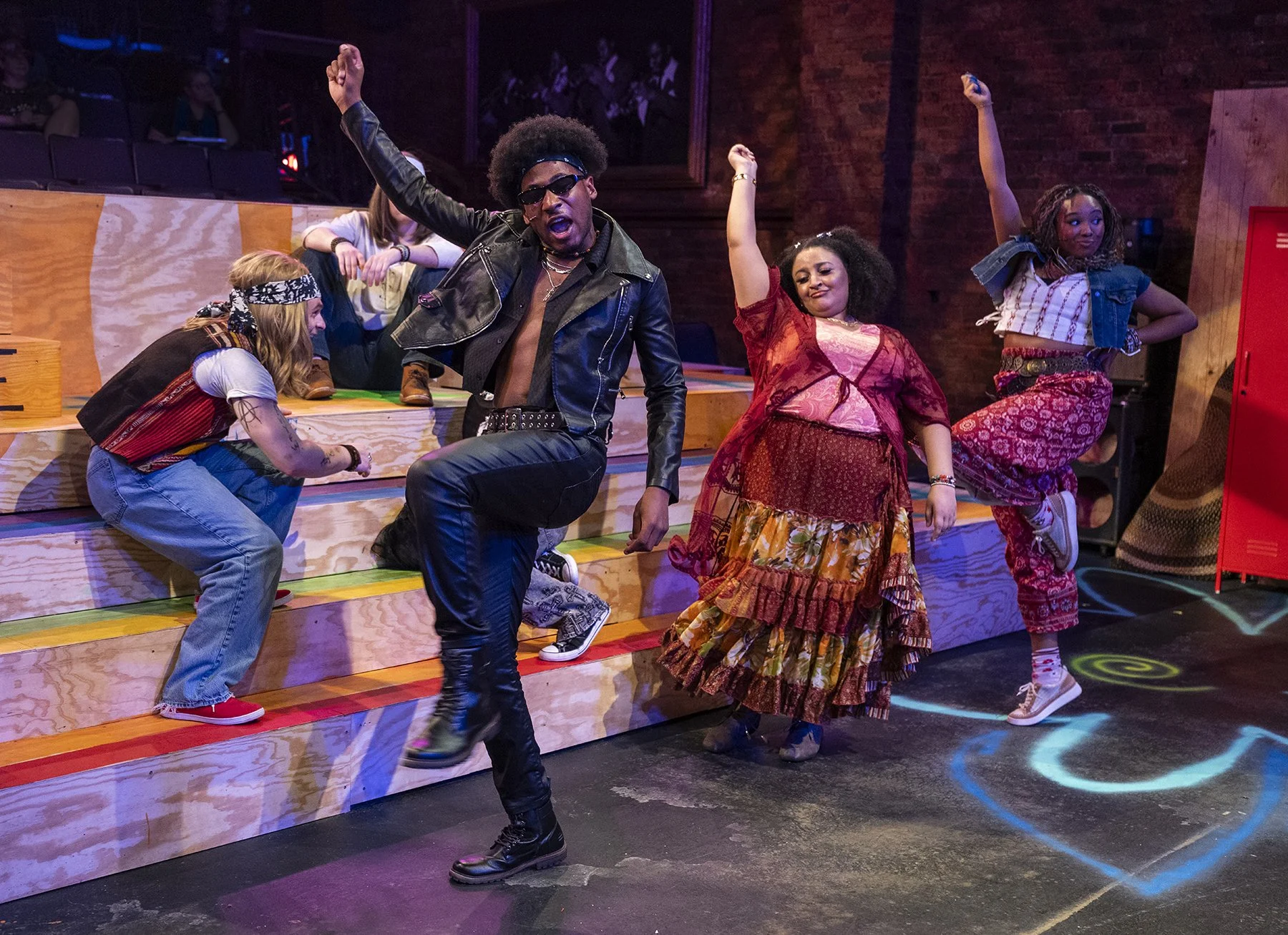
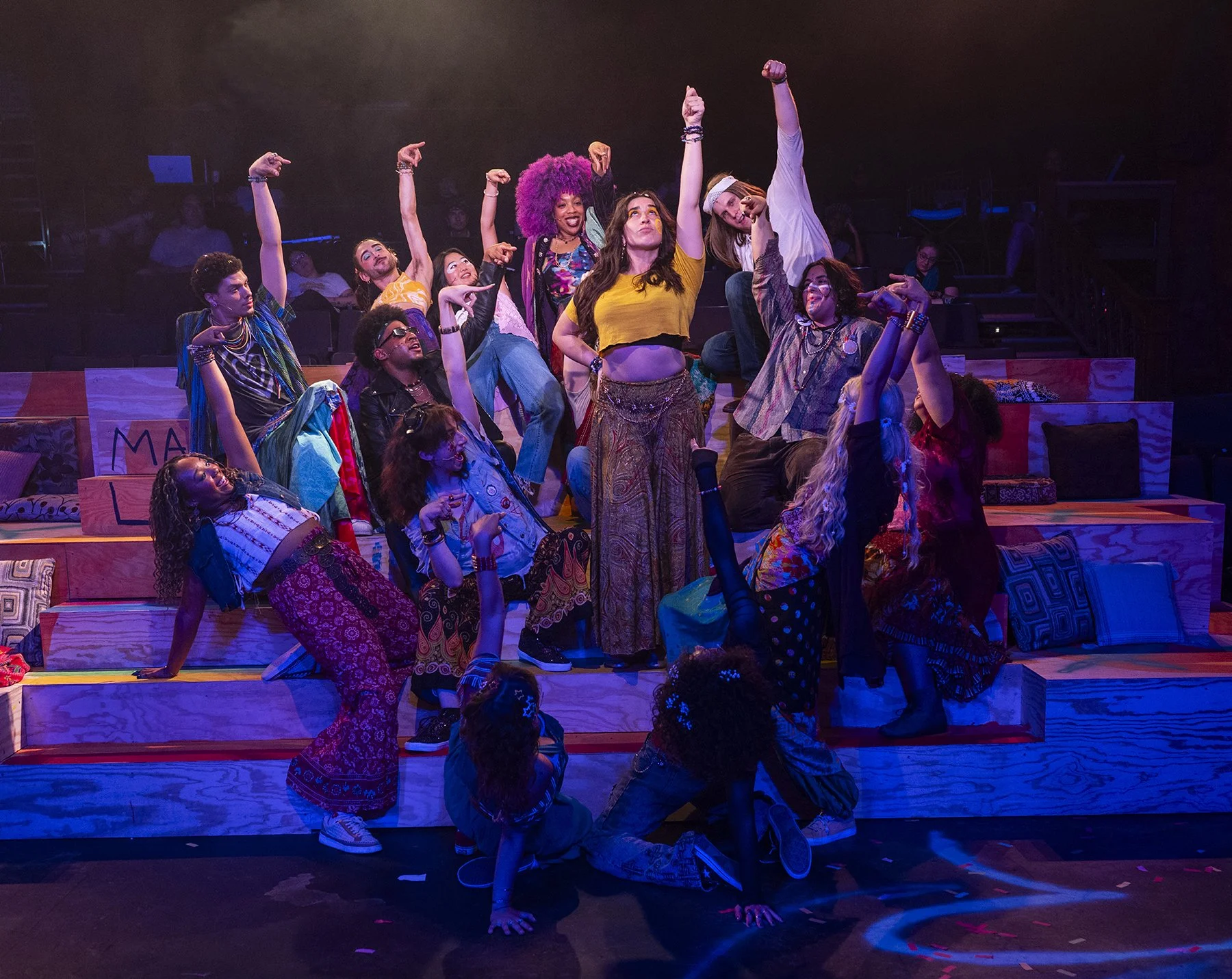
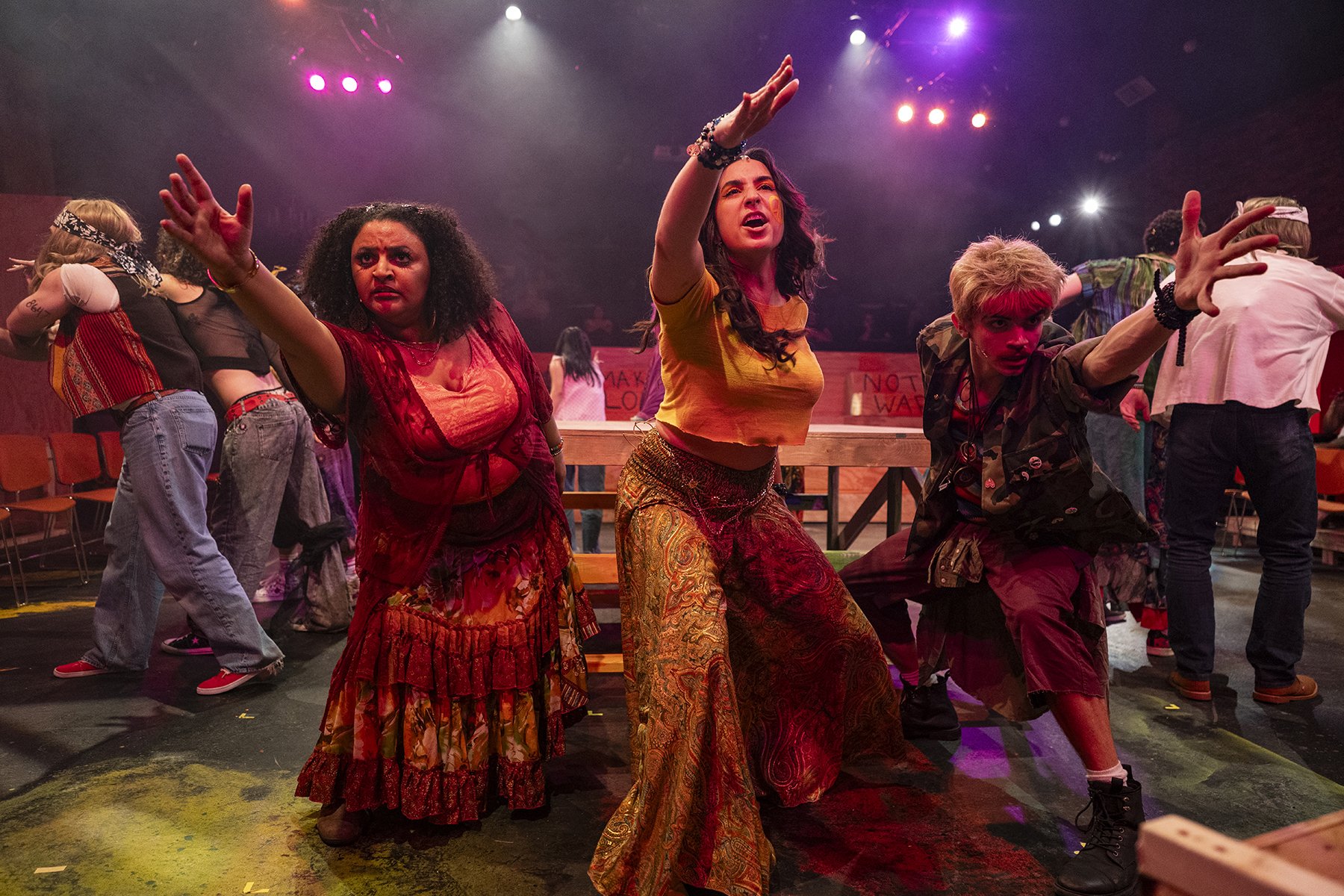
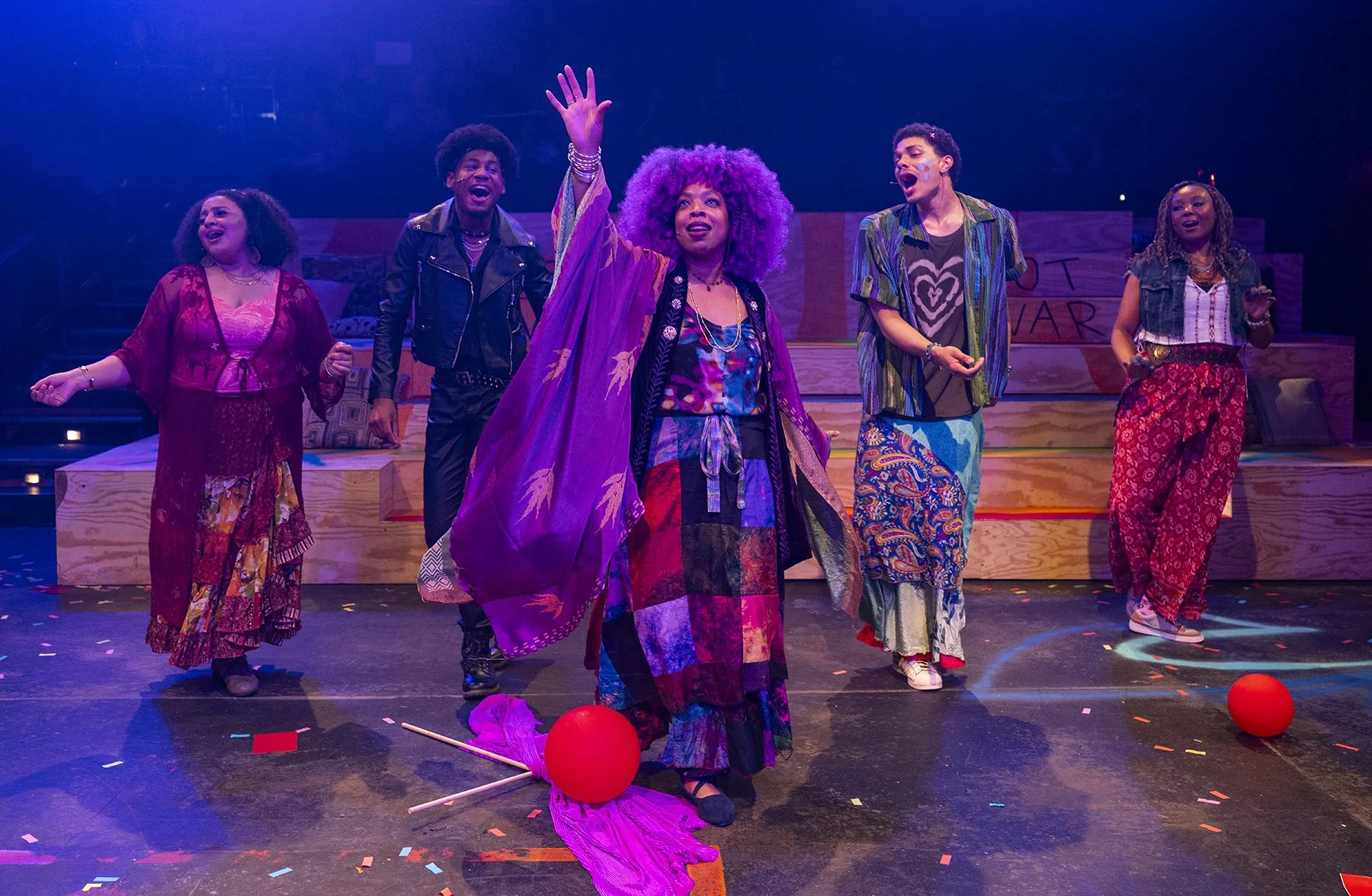
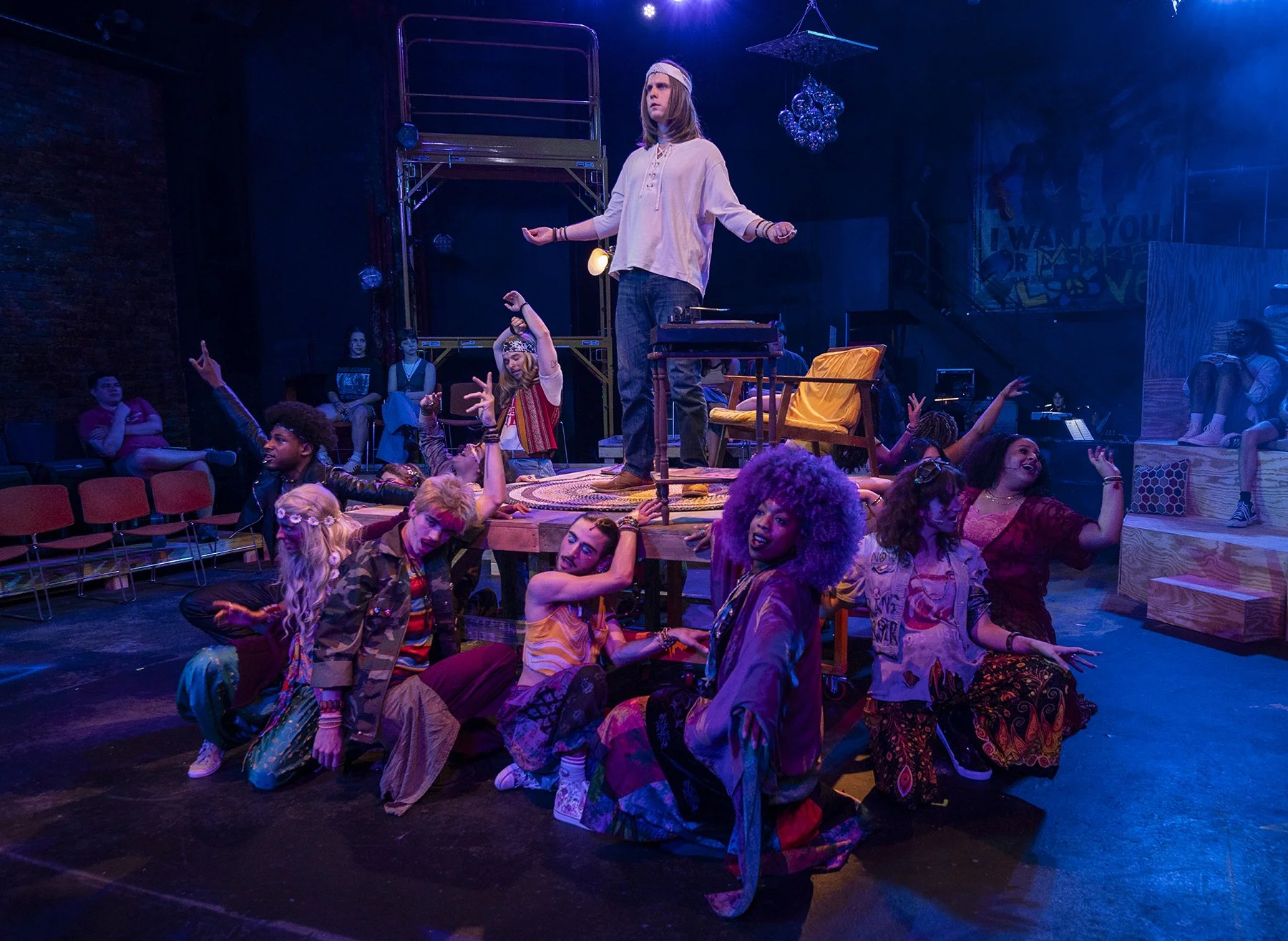
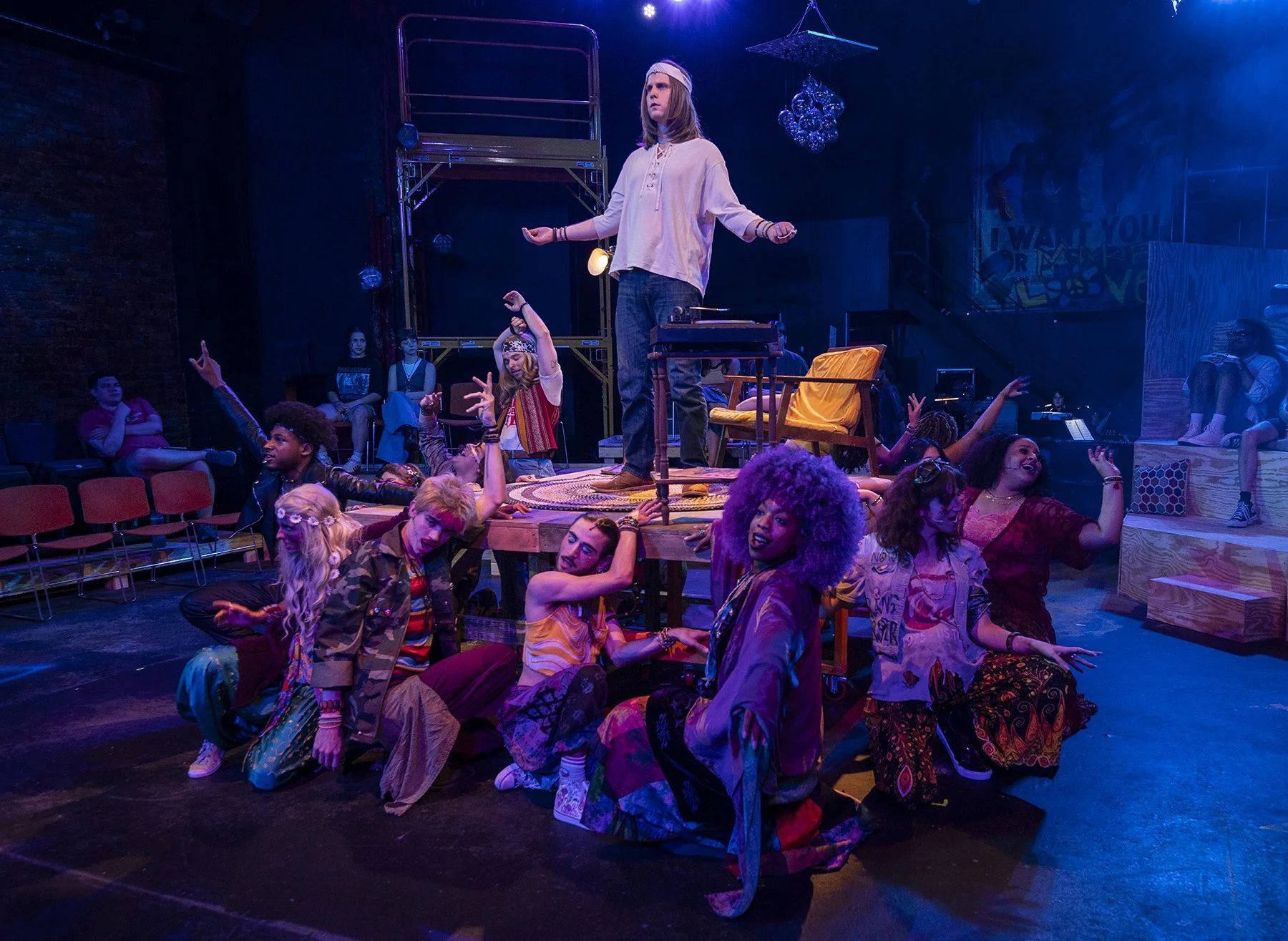
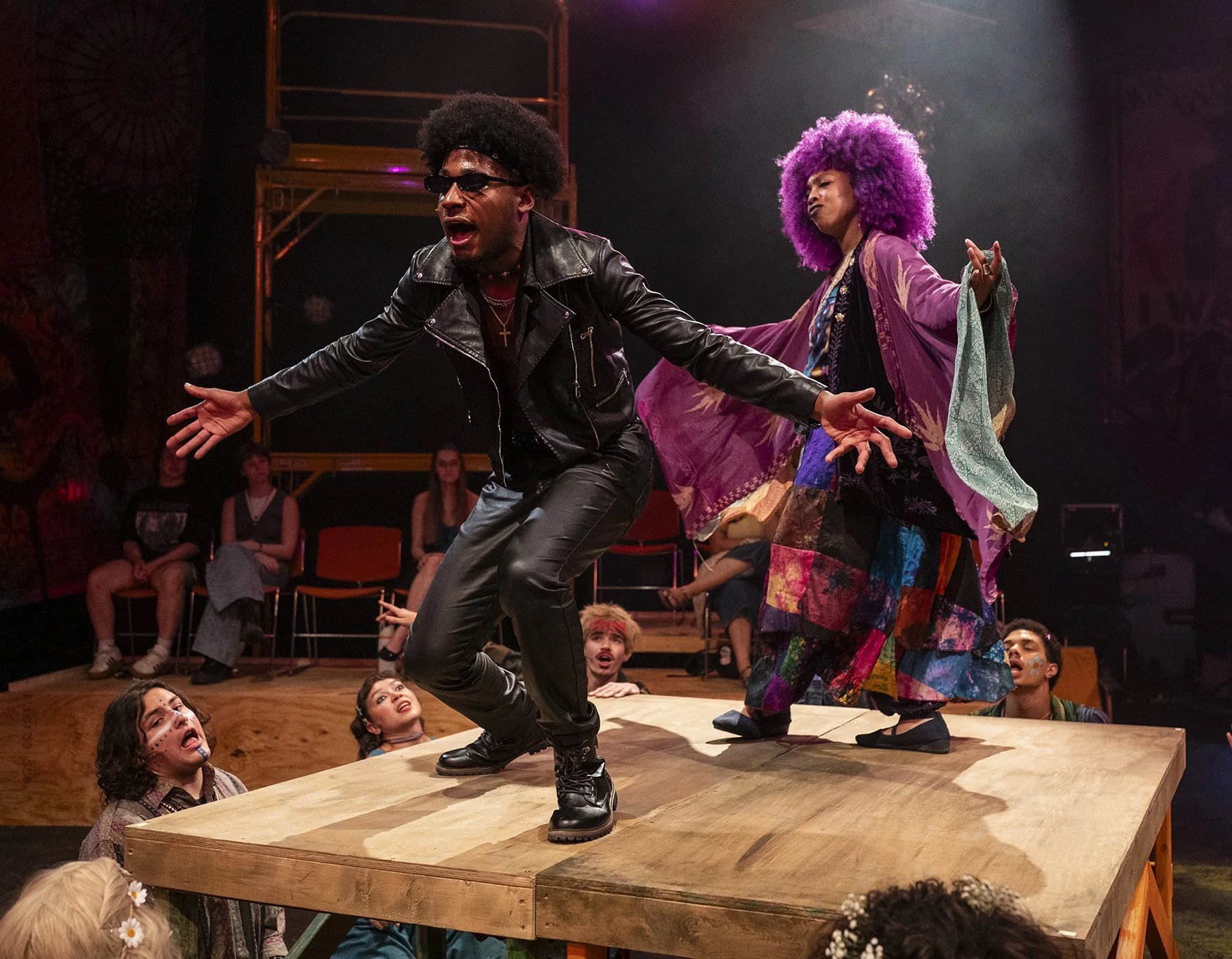
Rado and Ragni's art-imitating-life play serves as a call for peace, reflecting the taboo subjects of its era, highlighting the dynamic, evolving landscape in the United States, where societal norms are increasingly challenged and redefined. The play provides insight into our growing acceptance of diverse perspectives and behaviors, contributing to cultural evolution, much like how the world evolved in response to changing views regarding homosexuality, shaping the dialogue around what is considered acceptable in modern society. The performance opens with the cast interacting with the audience, setting a chilled atmosphere, drawing the audience into the show. Some members of the cast gather on stage, animatedly chatting amongst themselves, sharing laughter and anecdotes. The vibrant colors of the performers' costumes create a captivating visual, and the platform staging is equally striking.
As part of the experience, the audience is encouraged to share their views by jotting down their personal emotions of rebellion or love with a marker on the platform stage and in the surrounding spaces, transforming the entire venue into an expressive canvas. Featuring a core cast of 25, their wild, wonderful, eclectic perspective is two hours and thirty minutes of sheer psychedelic love. The cast featured several notable members, including Chosen Mitchell as Dionne, Catherine Rodriguez O'Connor and Nicki Rossi as Jeannie, who delivered impressive vocal performances. Zac Richey gave an amazing performance as Berger, while Gavin Rhys portrayed Claude with great aptitude. Overall, the cast delivered a pulsating, energetic performance. The radical group—though most of the cast wasn't even alive during the baby-boom, Generation X era—brings to life the identity struggles and dreams of youth, showering viewers with a kaleidoscope of sounds and emotion, featuring an astounding 40 songs; the two-act production left an indelible mark.

The topsy-turvy musical Hair was entirely deliberate in presenting an unstructured, unpredictable narrative of the turbulent times. I was impressed by the young cast's ability to convey the characters' feelings through the lyrics and music by Rado and Galt MacDermot; however, the wild onstage atmosphere more closely mirrored the revolutionary era of the gay rights movement, similar to The Stonewall Riots of 1969, which was the catalyst for the modern gay liberation movement, than the radical rock-and-roll political movement of the 60s. The live and let live, pansexuality, free love was a part of Rado and Ragni's life as they were romantic partners. With both movements sharing similarities, the portrayals were not just acts; they were heartfelt representations of the struggle, courage, and quest for equality that characterized them. This real-life account helps you understand the play's chaotic confusion.
Still, I agree with historical critics of the original performance, who note a storyline that ranges from flashy but formless in some scenes to one filled with raw energy and powerful themes. Chopin's audio equalization needs improvement, as it was hard to hear some songs and singers over the music, but I felt the overall performance was entertaining and exhilarating.
⭐⭐⭐
Chopin Theatre
HAIR: The American Tribal Love-Rock Musical
Kokandy Productions
Book and Lyrics by Gerome Ragni & James Rado
Directed and Choreographed by Brennan Urbi
July 2 - September 13, 2026

Thanks for visting our website. For tickets, please click on the above logo and for additional reviews, click below.